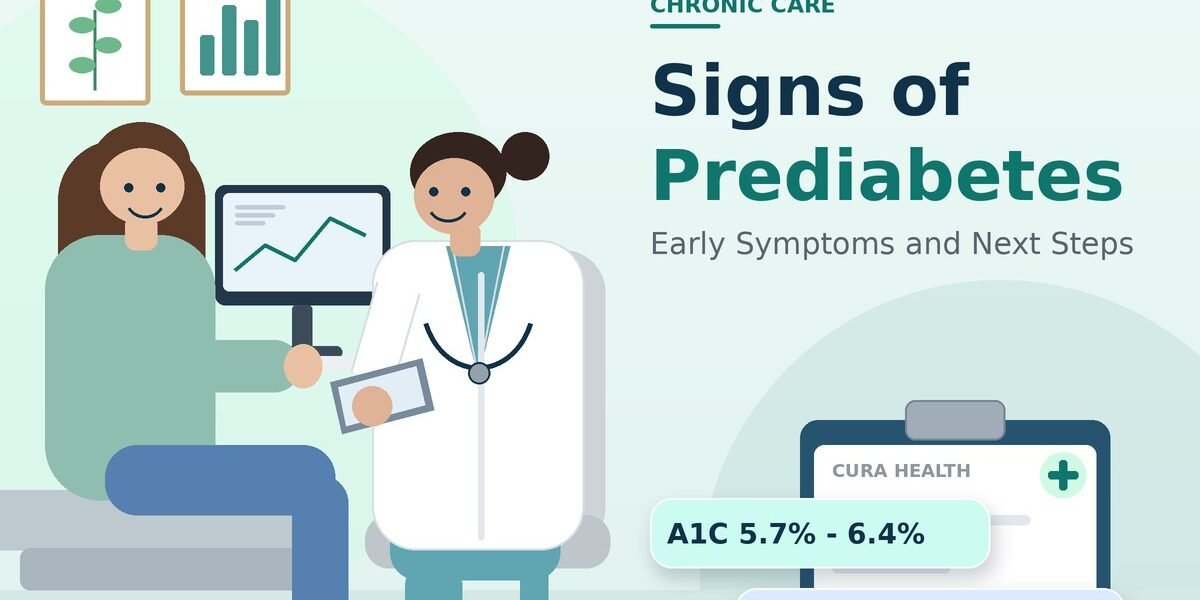
Prediabetes is a strange diagnosis because it usually comes with no symptoms at all. Your blood sugar is higher than normal but not high enough to be called diabetes, and most people only find out through a routine blood test. That’s exactly why it gets missed for years.
The good news is that this is the stage where change makes the biggest difference.
What prediabetes actually means
Doctors usually diagnose prediabetes with one of these results:
- Fasting blood glucose of 100 to 125 mg/dL
- A1C between 5.7% and 6.4%
- A two-hour result of 140 to 199 mg/dL on an oral glucose tolerance test
Diabetes starts at a fasting glucose of 126 mg/dL or an A1C of 6.5% and above. Prediabetes is the zone in between.
Subtle signs that sometimes show up
Many people have nothing. Some notice small changes that are easy to blame on something else:
- Darkened, velvety skin on the back of the neck, armpits or groin. This is called acanthosis nigricans and often points to insulin resistance.
- Increased thirst and urination, usually mild.
- Fatigue, especially after meals.
- Skin tags appearing more often.
- Blurry vision that comes and goes.
- Slow-healing cuts.
None of these proves anything by itself. They are reasons to ask for a test, not reasons to panic.
Who should be tested
Screening is generally recommended for adults with extra weight who have other risk factors, and for everyone starting around age 35. Ask for a test sooner if you have:
- A parent or sibling with type 2 diabetes
- High blood pressure or high cholesterol
- A history of gestational diabetes or PCOS
- A mostly inactive lifestyle
- South Asian, Black, Hispanic or Native American background, since risk is higher in these groups at lower body weights
If your result is normal, repeat the test about every three years, or sooner if your situation changes.
What actually lowers the risk
Large studies, including the US Diabetes Prevention Program, found that modest changes cut the chance of developing type 2 diabetes by around 58% over three years in high-risk adults. The changes were not extreme:
- Losing about 5 to 7% of body weight. For someone who weighs 90 kg, that is roughly 4.5 to 6 kg.
- Around 150 minutes of walking or similar activity each week.
- Eating fewer refined carbohydrates and sugary drinks, and more vegetables, beans and whole grains.
If you like details, start with one change. Replace one sugary drink a day with water or unsweetened tea. Walk for 15 minutes after dinner. Then add another change in a month.
Sleep, stress and muscle
People forget these. Short sleep makes cells less responsive to insulin, and chronic stress raises cortisol, which pushes glucose up. Strength training two days a week builds muscle that absorbs sugar, even if the number on your scale doesn’t change much.
Will I need medication?
Some people do. Doctors sometimes prescribe metformin to people at high risk, particularly those with a very high A1C, a BMI over 35 or a history of gestational diabetes. It’s a conversation to have with your doctor, not a replacement for lifestyle changes.
Frequently asked questions
Can prediabetes go away?
Yes. Many people return to normal blood sugar levels with weight loss and regular activity. Keep getting tested, because it can come back.
Does prediabetes always turn into diabetes?
No. Without changes, a large share of people do develop type 2 diabetes within several years, but it is not automatic.
Do I need to stop eating sugar completely?
No. Cutting back sugary drinks and sweets, and pairing carbohydrates with protein and fiber, is usually enough to start with.

Cura Editorial Team
Contributor at Cura Health Journal.