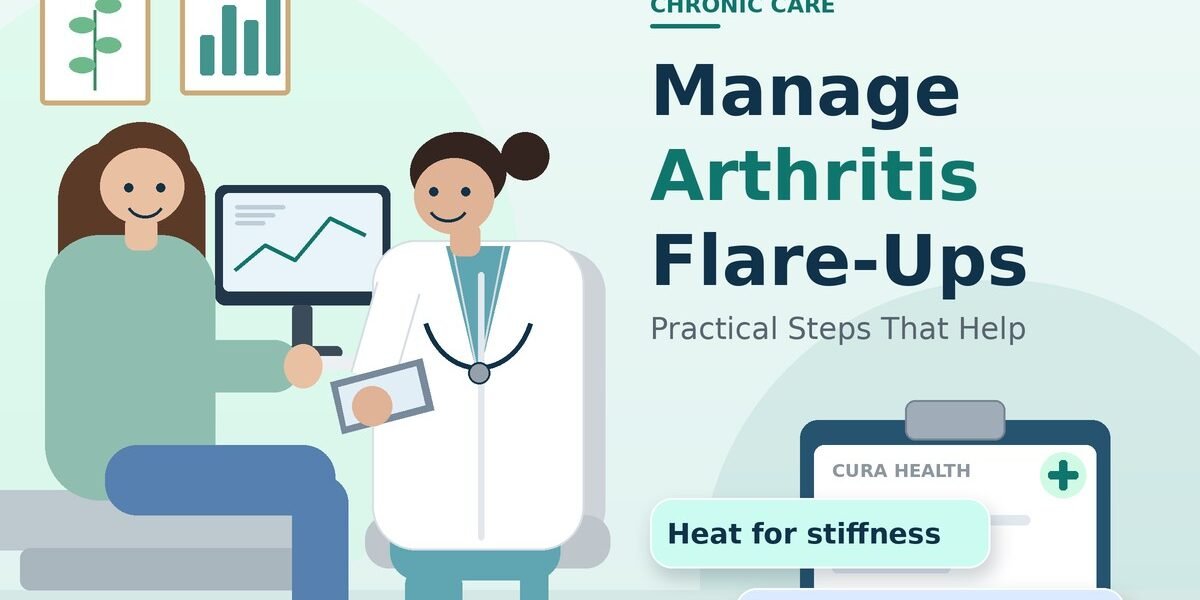
Arthritis doesn’t stay at one level. Most people have good weeks and bad weeks, and a flare-up can arrive after overdoing it, a stressful stretch, an infection, a missed medication or for no clear reason at all. Knowing what to do on day one of a flare can shorten it and keep you in control.
Know which arthritis you have
Osteoarthritis (OA) comes from joint wear and tear. Pain tends to worsen with activity and ease with rest. Rheumatoid arthritis (RA) is an autoimmune condition, with morning stiffness lasting more than an hour, swollen joints, fatigue and symmetrical symptoms. Gout, psoriatic arthritis and others are different again. The right flare plan depends on your diagnosis, so ask your doctor for one.
What to do when a flare starts
Rest the joint, but don’t stop moving completely. Short periods of rest reduce strain on a painful joint. Staying completely still for days causes stiffness and weakens muscle. Gentle range-of-motion movements several times a day help.
Use heat and cold. Heat, such as a warm shower or heating pad for 15 to 20 minutes, relaxes stiff muscles and eases morning stiffness. Cold packs wrapped in a cloth reduce swelling and numb sharp pain. Many people use heat for stiffness and cold for hot, swollen joints.
Take medication as prescribed. Don’t stop disease-modifying drugs for RA when you feel better or worse. For short-term pain relief, paracetamol (acetaminophen) or topical anti-inflammatory gels are options, and oral anti-inflammatories can help some people, if safe for your stomach, kidneys and heart. Check with your doctor or pharmacist.
Pace your day. Break tasks into smaller pieces, alternate heavier and lighter activities, and take breaks before pain forces you to. This keeps you from the boom-and-bust cycle of overdoing it on good days.
Protect the joints. Use larger joints for heavy tasks, for example carrying a bag on your forearm instead of gripping with your fingers. Jar openers, ergonomic knives and raised toilet seats are small tools with a big impact.
Habits that reduce flares over time
- Stay active between flares. Low-impact exercise such as swimming, cycling, walking and tai chi supports joints and improves mood.
- Keep a healthy weight. Every kilogram of body weight adds around four kilograms of load on the knees when walking.
- Eat an anti-inflammatory style diet. Vegetables, fruit, fish, olive oil and nuts are linked with less inflammation. For gout, limiting alcohol, sugary drinks and red meat is also important.
- Sleep well. Poor sleep makes pain feel worse, and pain makes sleep worse.
- Manage stress. Stress is a common flare trigger. Even ten minutes of breathing exercises or a quiet walk helps.
- Track patterns. Note possible triggers: weather, new activity, diet changes, missed doses or illness.
When to contact your doctor
Call your doctor if a flare lasts more than a few days despite home care, if you have a new hot, red, very swollen joint, or if you have a fever. A sudden, very painful joint with fever may be an infection or gout and needs same-day care. If you have RA and flares are frequent, your treatment plan may need adjusting, and early changes protect joints from permanent damage.
Frequently asked questions
Does weather really affect arthritis?
Many people report more pain in cold, damp weather. Research is mixed, but the experience is common, and staying warm and active helps.
Are supplements like glucosamine worth it?
Evidence is mixed and benefits are small for most people. Talk to your doctor before starting supplements, especially if you take blood thinners.
Should I exercise during a flare?
Gentle movement is usually fine, but avoid high-impact activity on a painful joint. Return to your normal routine gradually.

Cura Editorial Team
Contributor at Cura Health Journal.