If you’ve had a blood test and seen “HbA1c” or “A1C” on the report, you may have wondered what the number really says. A1C is one of the most useful tests in diabetes care because it doesn’t depend on what you ate this morning.
What A1C measures
Glucose in your blood sticks to hemoglobin, a protein in red blood cells. Red blood cells live for about three months, so the A1C percentage reflects your average blood sugar over roughly the past two to three months. The more glucose in your blood, the higher the percentage.
The standard ranges
According to the American Diabetes Association:
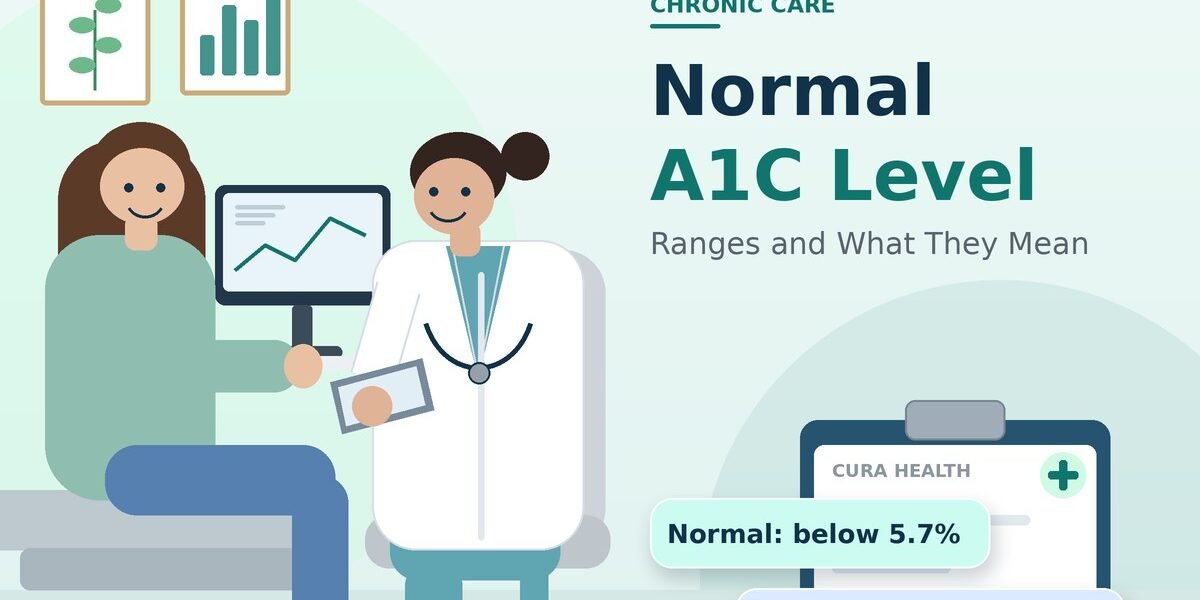
- Normal: below 5.7%
- Prediabetes: 5.7% to 6.4%
- Diabetes: 6.5% or higher on two separate tests, or on one test together with symptoms or a high glucose reading
A result right at the edge, such as 5.7% or 6.5%, usually leads to a repeat test or a different test to confirm.
What A1C means in everyday glucose numbers
The estimated average glucose (eAG) helps connect the percentage to the numbers on a home meter:
- 5.7% is about 117 mg/dL
- 6.0% is about 126 mg/dL
- 7.0% is about 154 mg/dL
- 8.0% is about 183 mg/dL
- 9.0% is about 212 mg/dL
What goal should I aim for?
For many adults with diabetes, doctors suggest a target below 7%. But targets are personal. A younger, otherwise healthy person may aim lower, while an older adult with other illnesses or a risk of low blood sugar may have a higher goal, such as below 8%. Ask your doctor what your own number should be, and why.
How often to test
If your blood sugar is steady and you’re meeting your goal, testing twice a year is typical. If your treatment changed or you’re not at goal, every three months is common. People with prediabetes are usually checked once a year.
When A1C can be misleading
A1C depends on red blood cells, so anything that changes their lifespan can make results unreliable:
- Anemia, including iron or B12 deficiency
- Sickle cell trait or other hemoglobin variants
- Recent blood loss or transfusion
- Kidney disease
- Pregnancy
If your A1C doesn’t match your home readings, ask whether a fasting glucose, fructosamine test or continuous glucose monitor would give a clearer picture.
How to bring your A1C down
Small, steady changes matter. Lowering A1C by even one percentage point reduces the risk of eye, nerve and kidney complications. The same basics apply: regular walking, balanced meals with fewer refined carbs, taking medicines as prescribed, good sleep and managing stress. A1C changes slowly, so give any new habit at least three months before judging the result.
Frequently asked questions
Can I lower my A1C quickly before a test?
Not meaningfully. Because it averages about three months, a few good days won’t change it. Consistent habits do.
Is 5.6% a good A1C?
Yes. It is in the normal range, though risk factors such as family history still matter.
Does fasting matter for an A1C test?
No. You can have the test at any time of day, without fasting.

Cura Editorial Team
Contributor at Cura Health Journal.