Gout friendly eating when you eat out is a practical skill, not a test of willpower, because restaurant meals are built around large portions, rich sauces, sugary drinks, and alcohol, all of which can work against a gout friendly pattern. Gout begins when uric acid, a byproduct of breaking down purines, builds up and forms crystals in joints, causing intense inflammation and pain during a flare.
Diet does not cause gout on its own, and diet alone does not treat a flare, but eating patterns that limit high purine foods, limit alcohol and sugary drinks, and support a healthy weight can reduce flare risk over time. Eating out fits into that pattern, if you plan a little, choose with a few simple rules, and keep portions in mind.
This guide focuses on the eating out angle, distinct from an attack diet guide. It covers planning before you go, menu reading, drinks, portions, common restaurant types, and what to do after a meal that was less gout friendly than planned. It is general information about eating patterns, not personal dietary advice for any individual reader. If you have gout together with kidney disease, diabetes, or other conditions, your clinician or dietitian may advise different choices, and that individual guidance should take priority.
For eating during a flare itself, see Gout Flare-Up Diet. That guide covers foods and drinks to avoid and to choose during an attack, and why medicine is still needed to treat it.
The gout friendly pattern, in one paragraph
Before menu choices make sense, it helps to hold the overall pattern in mind. A gout friendly eating pattern generally emphasises vegetables, fruits, whole grains, low fat dairy, and plant proteins such as beans and lentils, with moderate amounts of lean poultry and fish, while limiting red meat, organ meats, certain seafood high in purines, alcohol, and sugary drinks and foods. That pattern overlaps with many heart healthy eating patterns, which is useful, because gout often travels with heart, kidney, and metabolic risk factors.
You do not need to memorise purine tables to eat out well. You need a few reliable defaults, a few foods to limit, and a habit of choosing the simpler version of a dish where possible. For background on gout, purines and flare triggers, see the National Institute of Arthritis and Musculoskeletal and Skin Diseases page on gout.
Weight also matters over time, because excess weight is linked to higher uric acid and higher flare risk, and because gradual weight loss, where relevant, can help. Eating out often adds calories through large portions, fried foods, creamy sauces, and sugary drinks, so portion and drink choices at restaurants affect weight as well as purines. That double effect is why restaurant habits deserve attention, even for people who eat well at home.
Planning before you go: the five minute habit
Planning takes five minutes and prevents most restaurant difficulties. Look at the menu online before you go, if available, and pick one or two gout friendly options in advance, so you are not deciding while hungry and surrounded by tempting specials. Choose a restaurant type that offers those options easily. A restaurant with grilled, roasted, or steamed dishes, salads, vegetable sides, and whole grains is usually easier than a restaurant built around fried foods, rich meats, and all you can eat portions, though most menus offer at least one workable choice if you look.
Eat a small, balanced snack before you go if you will be very hungry on arrival, because hunger makes portion control and careful choice much harder. Drink water before and during the meal, and plan your drink choice in advance, so alcohol or a sugary drink is not the default. If you are going with friends, tell them in general terms that you are choosing lighter options, so social pressure to share rich dishes or rounds of drinks is easier to handle.
None of these steps requires a special diet announcement. They are simply preparation, and they make the meal itself more enjoyable, because you are not wrestling with choices at the table.
If you have a flare coming on, or you are in the middle of a flare, consider whether eating out is wise that day. Rest, hydration, and following your clinician plan for the flare usually matter more than a restaurant meal, and a rich meal during a flare can add discomfort without benefit. Postponing or choosing a very simple meal at home is a reasonable choice on flare days, and it is not a failure of the eating pattern.
Reading a menu with gout in mind
Menu reading for gout is about spotting the simpler, plant forward, lower purine version of a dish. Start with the protein. Grilled chicken, turkey, tofu, beans, lentils, eggs, and low fat dairy are usually easier choices than large portions of red meat, organ meats, or shellfish and oily fish high in purines. Fish in moderation can fit a gout friendly pattern, but large portions of certain fish, and especially shellfish and anchovy type fish, are higher in purines and are better limited.
When in doubt, choose a smaller portion of a lean protein, paired with vegetables and whole grains, rather than a large portion of a rich meat as the centre of the meal.
Next, look at cooking method. Grilled, roasted, steamed, and baked dishes are usually simpler than fried, breaded, or creamy dishes, which add fat, calories, and often sodium, without adding gout benefit. Sauces deserve attention too. Tomato based, herb based, and olive oil based sauces are usually lighter than creamy, buttery, or gravy based sauces, which are rich and often made with meat drippings. Ask for sauce on the side where possible, so you control the amount, and choose a side salad or vegetables instead of chips where the menu allows a swap.
Bread, rice, pasta, and potatoes are generally gout friendly in themselves, especially whole grain versions, but portion and topping matter. A large portion of white rice or pasta with a rich sauce can add many calories, while a moderate portion of whole grains with vegetables balances the meal better. Salads are a good default, provided the dressing is light and the toppings are not dominated by fried meats, cheese, and creamy dressings. Ask for dressing on the side, and choose a vinaigrette style dressing where available.
Drinks: the choice that matters most at a restaurant
Drinks deserve special attention, because they are the easiest place for a restaurant meal to work against gout. Alcohol, especially beer, raises uric acid and is linked to flare risk, and spirits and wine also contribute. If you drink alcohol, limiting it sharply, or avoiding it on days when gout risk is already high, is one of the most effective restaurant choices you can make. If you do choose alcohol, a small amount with food and water, rather than several drinks on an empty stomach, is the less harmful pattern, but avoidance remains the gout friendliest choice, and your clinician can advise on what fits your situation.
Sugary drinks matter almost as much. Regular soda, sweetened juices, and drinks sweetened with high fructose corn syrup can raise uric acid, and they add calories without nutrition. Water is the best default at a restaurant, with sparkling water, unsweetened tea, or unsweetened coffee as alternatives. Fruit juice, even without added sugar, contains natural sugars in concentrated form, so a whole fruit is generally a better choice than a large glass of juice. Diet drinks avoid sugar, but they do not add nutrition, and water remains the simplest, most reliable choice.
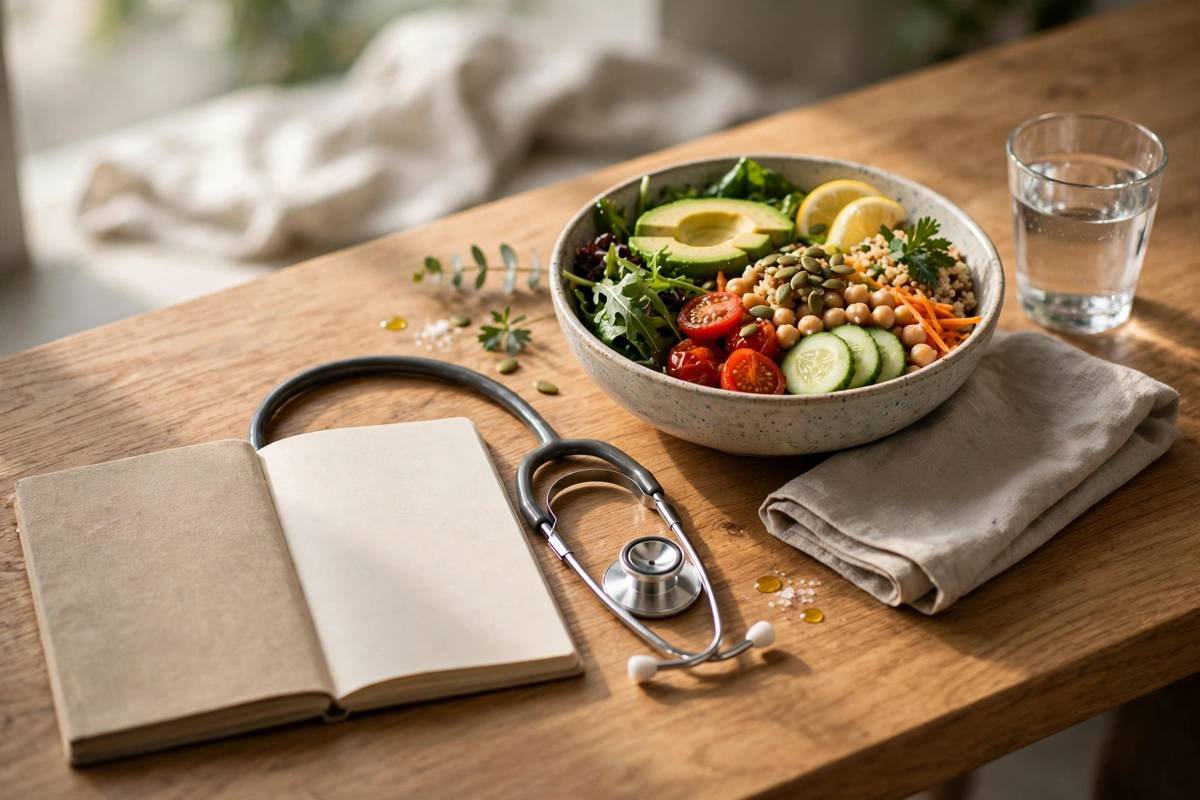
Keep water on the table through the meal, and drink steadily, rather than waiting until you are thirsty. Hydration supports uric acid excretion through the kidneys, and it also helps you notice fullness earlier, which supports portion control. A glass of water before the meal, and water with the meal, is a small habit with outsized benefit for gout friendly eating out.
Portions, sharing, and pacing
Portion size is often the real problem at restaurants, more than any single ingredient. Restaurant portions are frequently larger than home portions, sometimes twice as large, and finishing a large plate out of habit adds purines, calories, and sodium beyond what a gout friendly pattern intends. Practical portion habits help without making the meal feel restricted. Share a main dish with a companion and add a salad or vegetable side, ask for a smaller portion where the menu offers one, or plan to take half home in a box.
Eating slowly, pausing between courses, and checking fullness halfway through the meal all help you stop at comfortable fullness rather than at plate emptiness.
Sharing dishes, common in many restaurant styles, can work well for gout if the shared dishes include vegetables, salads, grains, and lean proteins, and less well if the shared dishes are dominated by rich meats and fried items. Guide sharing toward the plant forward dishes, take a moderate portion of richer dishes rather than avoiding them entirely if you wish to try them, and balance the meal with water and vegetables. That balanced approach is more sustainable than strict avoidance at a social meal, which often leads to overindulgence later.
Dessert also fits into portion thinking. Fresh fruit, sorbet in a small portion, or a shared dessert are usually lighter choices than large, creamy, or very sweet desserts. If dessert is part of the occasion, enjoy a shared portion slowly, rather than a large individual portion eaten quickly. The goal is a meal that fits the overall pattern, not a meal that is perfect in every detail.
Common restaurant types, and workable choices in each
Different restaurant types present different challenges, and a few defaults for each type make choosing easier. At a grill or steakhouse, choose grilled chicken, turkey, or fish in a moderate portion, with salad and vegetables, rather than a large steak with creamy sides, and limit alcohol and sugary drinks. At an Italian restaurant, choose tomato based pasta with vegetables and lean protein in a moderate portion, with salad, rather than creamy pasta with large meat portions. At an Asian restaurant, choose steamed or grilled dishes with vegetables and rice in a moderate portion, and watch for very salty sauces and fried items, asking for sauce on the side where possible.
At a fast food restaurant, where options are limited, choose grilled over fried, salad or vegetables over chips where available, water over soda, and a smaller size over a large size. At a buffet, survey the whole buffet before taking food, fill the plate first with salad and vegetables, then add a moderate protein portion, and avoid returning for large second helpings of rich dishes. At a café, choose a salad, soup, or sandwich with lean protein and vegetables, with water or unsweetened tea, rather than a large pastry and a sugary drink.
These defaults are not rules for every meal. They are starting points that make a gout friendly choice the easy choice, in the restaurant type you actually visit, without needing to study a purine table at the table.
After the meal: no guilt, just a return to pattern
A single restaurant meal, even a rich one, does not undo a gout friendly pattern, and it should not trigger guilt or extreme restriction the next day. Gout risk builds over time, from overall patterns, weight, alcohol, and other factors, not from one meal alone. After a richer meal, simply return to your usual pattern the next day, drink water, stay active as usual, and continue medicines as prescribed. Do not skip meals, fast excessively, or take extra medicine to compensate, unless your clinician has advised a specific step. Those compensations can cause other problems, and they do not reliably prevent a flare.
If a flare follows a restaurant meal, note what you ate and drank, including alcohol and portion sizes, and bring that note to your next visit, together with the flare timing and severity. That note helps your clinician judge whether diet, medicines, or other factors need adjustment, and it helps you refine future restaurant choices without blaming a single food. For flare eating guidance, see Gout Flare-Up Diet. That guide covers the flare period specifically, while this guide covers the everyday eating out pattern that helps reduce flare risk over time.
Ordering scripts for common restaurant situations
Gout friendly eating out becomes easier with a short ordering script for each common situation. At a steakhouse, choose a smaller portion of lean meat, fill the rest of the plate with vegetables and a whole grain side, and skip the sugary drink. At a seafood restaurant, favour moderate portions of lower purine fish over large portions of shellfish and oily fish that are high in purines, and ask how the dish is cooked, because fried and heavily sauced dishes add fat and calories without adding flavour you need.
At a buffet, walk the full line first, choose one plate, and sit away from the serving area, so second helpings become a deliberate choice rather than a default. At a bar or celebration, decide the drink plan before you arrive, and alternate any alcoholic drink with water, or choose a non alcoholic option from the start. These scripts work because they replace a decision made while hungry with a decision made in advance.
For related reading on this site, read Why Chronic Inflammation Matters Even When You Feel Fine for how persistent inflammation relates to gout and other long term conditions.
Frequently asked questions
Can I ever eat red meat or seafood at a restaurant with gout
Moderation and portion matter more than total avoidance for most people, unless your clinician advises otherwise. A small portion of lean meat or fish, balanced with vegetables and whole grains, fits a gout friendly pattern far better than a large portion of rich meat or shellfish, especially with alcohol. Discuss your personal limits with your clinician or dietitian.
Is beer worse than other alcohol for gout
Beer is often cited as particularly linked to gout risk, because it contains purines as well as alcohol, but all alcohol can raise uric acid and flare risk. Limiting alcohol sharply, or avoiding it, is the gout friendliest restaurant choice, regardless of type. Ask your clinician what fits your situation.
Should I avoid all purine foods when eating out
No. Purines are present in many healthy foods, including vegetables and legumes, and those foods do not carry the same gout risk as high purine meats and seafood. Focus on limiting high purine meats, organ meats, certain seafood, alcohol, and sugary drinks, while keeping a varied, plant forward pattern, rather than trying to avoid all purines.
What is the single best habit for gout friendly eating out
Choosing water instead of alcohol or sugary drinks, and keeping portions moderate, together give the largest benefit for the least effort. Those two habits improve purine load, calorie load, and hydration at once, and they work in every restaurant type.
Sources
- National Institute of Arthritis and Musculoskeletal and Skin Diseases, Gout
ul>
For eating during a flare, read Gout Flare-Up Diet.