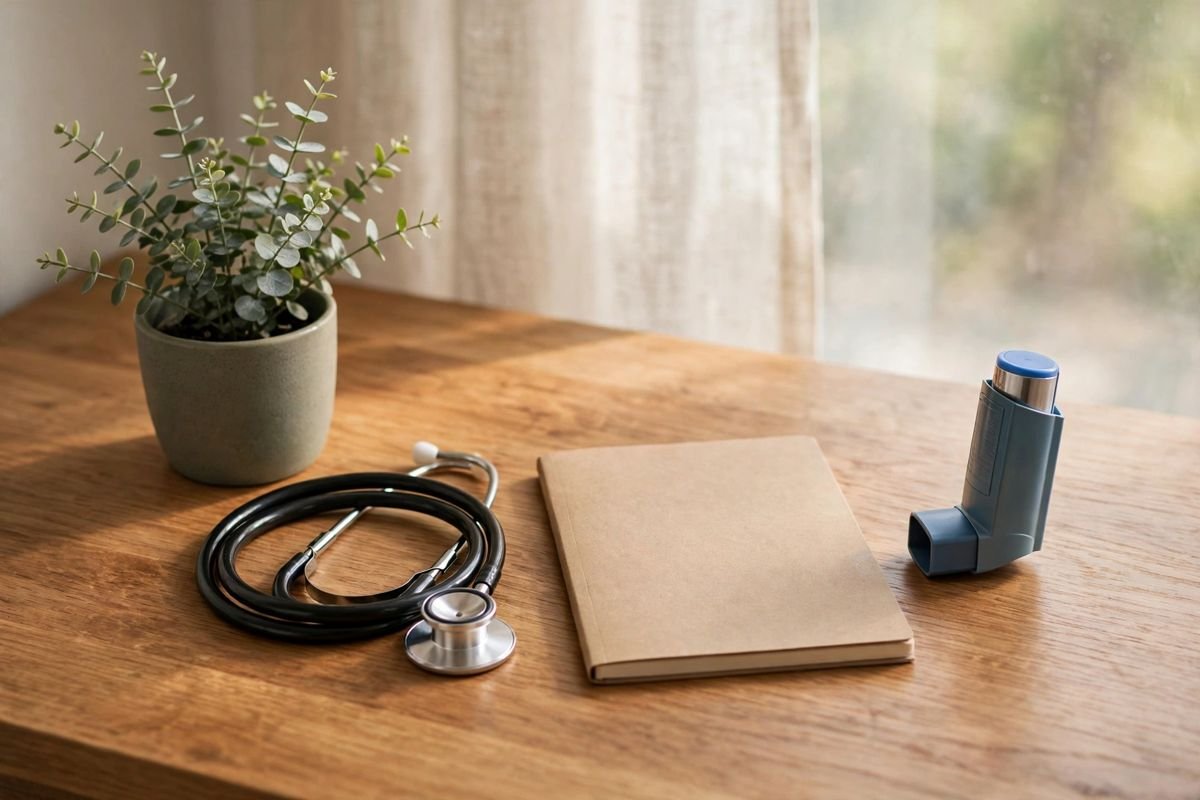
Breathing better at home with asthma is less about a single remedy and more about a set of everyday habits that, together, reduce the triggers, support the medicines you already use, and make breathing feel easier day to day. This guide focuses on everyday habits, distinct from a triggers list alone. It covers inhaler routine, indoor air, cleaning, bedroom habits, activity, and what to do when breathing worsens, in practical terms you can apply at home.
It is general information about daily habits, not personal treatment advice. Asthma action plans, medicine doses, and emergency steps should come from your clinician, and this guide is designed to support that plan, not to replace it.
Asthma varies widely from person to person. Triggers, severity, and medicine needs differ, so a habit that helps one person may matter less for another. The habits below are organised so you can try them in order of likely benefit for your home, and keep the ones that help you. If breathing worsens, if rescue medicine is needed more often than your plan advises, or if you have trouble speaking in full sentences, seek care promptly as your action plan directs.
The inhaler routine: the habit that underpins the rest
The single most important home habit for most people with asthma is using inhalers exactly as prescribed, and using them correctly. That sounds obvious, but inhaler technique is a common weak point. A dose that does not reach the lungs properly, because of rushed technique, poor coordination, or a faulty device, cannot work as intended, no matter how good the medicine itself is. Ask your clinician or pharmacist to watch you use your inhaler at least once, and to correct technique if needed. That short check often improves control more than any other single step.
Keep inhalers in consistent, visible places, so the daily routine is easy to follow. A controller inhaler, used daily to reduce inflammation over time, needs a regular time, such as morning and evening, linked to another daily habit like brushing teeth. A reliever inhaler, used when symptoms appear, should be accessible but not used as a substitute for the controller. If you notice you are using the reliever more often, needing it at night, or needing it before activity more than usual, note that pattern and raise it at your next visit, because increased reliever use often signals that control has slipped and the plan may need review.
Check inhaler supplies regularly. Note expiry dates, check dose counters where present, and keep a spare reliever inhaler where you can reach it quickly, especially at night. A routine that depends on an empty inhaler fails at the worst moment. Cleaning the inhaler mouthpiece as directed, and using a spacer where prescribed, also support correct delivery. A spacer, which is a chamber that holds the medicine mist so you can breathe it in more slowly, helps many people, especially children and people who struggle with coordination, and it is worth asking about if you have not been offered one.
Indoor air: the home as a breathing environment
Indoor air is the air you breathe most, so small improvements at home can have a large effect over a day. The Centers for Disease Control and Prevention lists common asthma triggers that are often present at home, including secondhand smoke, dust mites, pets, mold, cockroach allergen, and smoke from burning wood or grass. Reducing those triggers does not cure asthma, but it reduces the frequency and severity of symptoms for many people, by lowering the daily load on sensitive airways.
Start with smoke. No one should smoke near a person with asthma, in the home, in the car, or wherever that person spends a lot of time. Secondhand smoke is a strong trigger, and it also harms the lungs of people without asthma. If you smoke, quitting is the most effective indoor air step available, and support is available from clinicians and quit programmes. If others in the household smoke, agree on a smoke free home and car rule, and ask visitors to respect it as well.
Next, address dust and humidity. Dust mites, microscopic bugs present in many homes, thrive in bedding, carpets, and soft furnishings, especially in humid conditions. Allergen proof mattress and pillow covers, washing bedding weekly and drying it completely, vacuuming regularly with a vacuum equipped with a HEPA filter, and keeping relative humidity around 30 to 50 percent, where feasible, all reduce dust mite exposure. Those steps are covered in more detail, room by room, in How to Reduce Asthma Triggers at Home. That guide gives a room by room plan that complements the daily habits here.
Cleaning without triggering symptoms
Cleaning helps asthma when it removes dust, mold, and allergens, but it can trigger symptoms when it stirs up dust or uses strong fragrances and sprays. The trick is to clean in a way that removes triggers without creating new ones. Dust with a damp cloth, which traps dust rather than spreading it, and vacuum slowly, allowing the filter to capture particles. Clean bathrooms and kitchens regularly to prevent mold, fixing leaks promptly, because mold grows where moisture persists, and mold spores are a common trigger.
Avoid sprays and foggers where possible, because the mist itself can trigger an attack, and because many cleaning sprays contain fragrances and chemicals that irritate airways. Apply cleaners to a cloth rather than spraying into the air, open windows or use a fan that blows air outdoors while cleaning, and leave the room while strong cleaners are used, if someone else can clean. Choose fragrance free products where available, and avoid air fresheners, scented candles, and incense, which add fragrance load to indoor air without any cleaning benefit.
If cleaning itself triggers symptoms, plan around it. Clean in short sessions with breaks, wear a mask if it helps and if your clinician advises it, and ask another household member to do the dustiest tasks, such as vacuuming a carpeted bedroom, where possible. The goal is a cleaner home with fewer symptoms, not a cleaning routine that leaves you breathless.
Bedroom habits: where breathing matters most at night
Night symptoms are common in asthma, and bedroom habits therefore deserve special attention. Keep the bedroom as low trigger as possible. Use allergen proof covers on mattress and pillows, wash bedding weekly, remove unnecessary soft furnishings, stuffed animals, and clutter from the bedroom, and keep pets out of the bedroom, especially if you are allergic to furry pets. If pets cannot be kept out of the home entirely, keeping them out of the bedroom at least gives airways several hours of lower exposure each night, which often improves morning symptoms.
Keep the bedroom cool, well ventilated, and not too humid. Open a window for fresh air when outdoor air quality is good, and close windows when outdoor air quality is poor, such as during high pollen, wildfire smoke, or heavy traffic pollution. A HEPA air cleaner in the bedroom can help some people, especially where outdoor air cannot be improved, though it is a supplement to trigger reduction, not a replacement for it. Check filters regularly, because a clogged filter helps little.
Prepare for the night as part of the routine. Take controller medicine at its regular time, keep the reliever inhaler within reach of the bed, and note any night waking, coughing, or reliever use in a simple log. Night symptoms are important information for your clinician, because they often signal that control needs review, even if daytime symptoms seem manageable. A pattern of night waking, recorded over a week or two, is far more useful at a visit than a general statement that nights are bad.
Activity, colds, and everyday life
Activity is part of breathing better at home, not a separate topic. Regular, moderate activity supports lung health, general fitness, and mood, and it helps many people with asthma feel less breathless over time, when asthma is well controlled. Warm up gradually before activity, especially in cold air, and follow your action plan for pre activity medicine where prescribed. If activity regularly triggers symptoms, note the pattern, including the type of activity, the air conditions, and the timing, and raise it at your next visit, rather than avoiding activity altogether. Avoidance leads to deconditioning, which makes breathlessness worse over time.
Colds and other respiratory infections often worsen asthma temporarily, because infections inflame airways that are already sensitive. During a cold, follow your action plan, monitor symptoms more closely, keep reliever medicine accessible, and seek care promptly if symptoms worsen beyond the plan guidance. Hand washing, avoiding close contact with people who are unwell where feasible, and keeping up with recommended vaccinations, as advised by your clinician, all reduce infection risk over the year.
Everyday life habits also matter. Strong emotions, laughter, and stress can trigger symptoms for some people, not because emotions cause asthma, but because they change breathing patterns. Slow, steady breathing, pausing during exertion, and allowing time to recover after a trigger, rather than pushing through, all help. If stress is a frequent trigger, stress management habits, such as regular sleep, activity, and relaxation time, support breathing indirectly, by reducing the overall load on airways.
When breathing worsens: knowing the plan
Every person with asthma should have an action plan from their clinician, explaining what to do when symptoms are well controlled, when they worsen, and when emergency care is needed. This guide does not replace that plan, but it reinforces one habit: know your plan before you need it. Keep a copy where you can find it quickly, share it with household members, and review it at each visit, so it stays current with your medicines and triggers.
In general terms, worsening symptoms, increased reliever use, night waking, or difficulty speaking or walking due to breathlessness all signal a need to follow the plan and to seek care as the plan directs. Do not wait for symptoms to become severe before acting, and do not stop controller medicine when you feel better, unless your clinician advises a change. Controller medicine works by keeping inflammation down over time, and stopping it when symptoms ease often leads to a return of symptoms later.
Keep a simple symptom log, noting reliever use, night symptoms, activity limits, and triggers, for a week or two before a visit. That log, together with your action plan, lets your clinician judge control accurately, rather than relying on a general impression. Good control means few symptoms, little reliever use, no night waking, and full activity, and a log shows how close you are to that picture.
A weekly home breathing review
Breathing better at home asthma habits work best when reviewed weekly, not when set once and forgotten. Each week, answer five questions honestly. Was the reliever inhaler needed more often than in the previous week. Were night symptoms present, and on how many nights.
Was the bedroom cleaned and bedding washed on schedule. Were strong fragrances, smoke, or dust exposure avoided in the home. And is the written asthma action plan still within easy reach, with its steps understood by everyone in the household. If reliever use is rising or night symptoms are returning, that trend matters more than any single day, and it is the right reason to contact a clinician for a review, rather than waiting for a severe episode. This guide is general information about daily habits, and it does not replace an individual action plan agreed with a clinician.
For related reading on this site, read Why Chronic Inflammation Matters Even When You Feel Fine for how persistent inflammation relates to long term conditions.
Frequently asked questions
Does cleaning more always help asthma
Not if cleaning stirs up dust or uses strong sprays and fragrances. Damp dusting, HEPA vacuuming, fragrance free products, and ventilation help, while dry dusting, spraying into the air, and scented products can worsen symptoms. Clean to remove triggers, not to add new irritants.
Should I keep pets out of the house completely
That depends on whether you are allergic to the pet, and on your clinician advice. If you are allergic to a furry pet, the CDC notes that keeping pets out of bedrooms, washing pets, and using a HEPA air cleaner can reduce exposure, while finding the pet another home is the most effective step if symptoms remain severe. Discuss the balance with your clinician, because pet decisions involve family as well as health.
Can I exercise with asthma
Most people with well controlled asthma can and should be active, with gradual warm up and with action plan steps where prescribed. If activity regularly triggers symptoms, note the pattern and raise it at a visit, rather than avoiding activity. Avoidance worsens fitness and breathlessness over time.
Why do I wake at night with asthma symptoms
Night symptoms often reflect airway narrowing that worsens overnight, and they are an important sign that control may need review. Note how often night waking happens, whether reliever medicine is needed, and what the bedroom conditions were, and bring that pattern to your next visit.
Sources
For room by room trigger reduction, read How to Reduce Asthma Triggers at Home.