
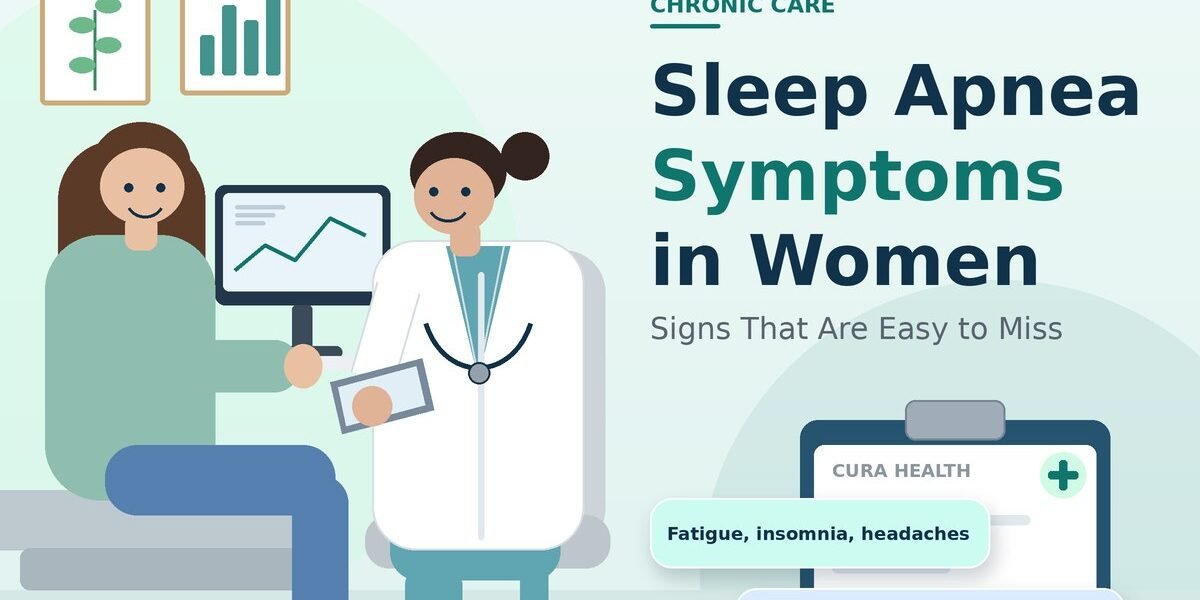
Quick answer: women with sleep apnea are less likely to describe loud snoring and gasping, and more likely to report tiredness, insomnia, morning headaches, low mood and anxiety. Because these look like other conditions, sleep apnea in women is often missed or misdiagnosed.
What sleep apnea is
In obstructive sleep apnea, the airway repeatedly narrows or closes during sleep, so breathing pauses or becomes shallow many times a night. Each time, the brain briefly wakes you up to restart breathing, usually without you remembering. The result is poor-quality sleep and strain on the heart and blood vessels.
For years, most research focused on middle-aged men, so the textbook symptoms are loud snoring, choking and gasping. Women often present differently.
Symptoms women report more often
- Fatigue and low energy, rather than falling asleep during the day
- Insomnia, trouble falling or staying asleep, or waking in the early hours
- Morning headaches
- Low mood, irritability or anxiety
- Trouble concentrating or memory lapses
- Waking with a dry mouth or sore throat
- Restless, unrefreshing sleep
- Needing to urinate at night
- Heart palpitations or night sweats
- Snoring, which is still the strongest single clue, though it may be softer or more occasional in women
Women with sleep apnea are often told they have depression, anxiety, insomnia, perimenopause or simply stress. Those can all be real, but if treatment isn’t working, sleep apnea is worth checking.
Why risk changes over a woman’s life
Before menopause, hormones such as estrogen and progesterone appear to help protect the airway, so risk tends to be lower. After menopause, and often during pregnancy, the risk rises. Other risk factors include:
- Extra weight, though a normal weight does not rule it out
- Polycystic ovary syndrome (PCOS)
- High blood pressure
- A small jaw, narrow airway or large neck
- Family history
- Smoking, alcohol or sedatives near bedtime
- Nasal blockage
Why it matters
Untreated sleep apnea is linked with high blood pressure, heart rhythm problems, heart disease, stroke, type 2 diabetes, low mood and accidents from sleepiness. It can also make morning blood pressure higher, as explained in our article on why blood pressure is high in the morning. If you also feel exhausted all the time, see our guide on the causes of chronic fatigue.
Quick self-check
Ask yourself:
- Do I snore, even lightly, or has someone noticed pauses in my breathing?
- Do I wake feeling unrefreshed, even after seven or eight hours?
- Do I get morning headaches?
- Do I have high blood pressure?
- Have I been treated for insomnia or depression without enough improvement?
If you answer yes to two or more, ask your doctor about a sleep test. A short questionnaire such as the Epworth Sleepiness Scale or STOP-Bang can help your doctor decide.
How it’s tested
- Home sleep apnea test: a small device you wear overnight at home, measuring breathing, oxygen and heart rate
- In-lab sleep study (polysomnography): a more detailed overnight test, often used if the home test is unclear or you have other conditions
Results are given as the apnea-hypopnea index (AHI), the number of breathing events per hour. Roughly 5 to 14 is mild, 15 to 29 is moderate, and 30 or more is severe.
Treatment options
- CPAP (continuous positive airway pressure): a mask that keeps the airway open. It is the most effective treatment for moderate to severe apnea.
- Oral appliances: a custom mouthpiece that moves the jaw forward, useful for mild to moderate cases
- Weight loss and exercise, if you carry extra weight
- Sleeping on your side and avoiding alcohol or sedatives near bedtime
- Treating nasal congestion
- Surgery or nerve stimulation devices in selected cases
Many women notice better energy, mood and concentration within weeks of starting treatment.
Frequently asked questions
Can you have sleep apnea without snoring?
Yes, though it is less common. Women are more likely than men to have subtle snoring or none at all.
Does sleep apnea go away after menopause or weight loss?
Weight loss can improve it a lot, but menopause usually raises risk rather than lowering it.
Can sleep apnea cause anxiety and depression?
It can contribute to both, and treatment sometimes improves mood.
Is CPAP uncomfortable?
It takes some getting used to. A good mask fit and follow-up with your sleep team help a lot of people stay with it.

Cura Editorial Team
Contributor at Cura Health Journal.