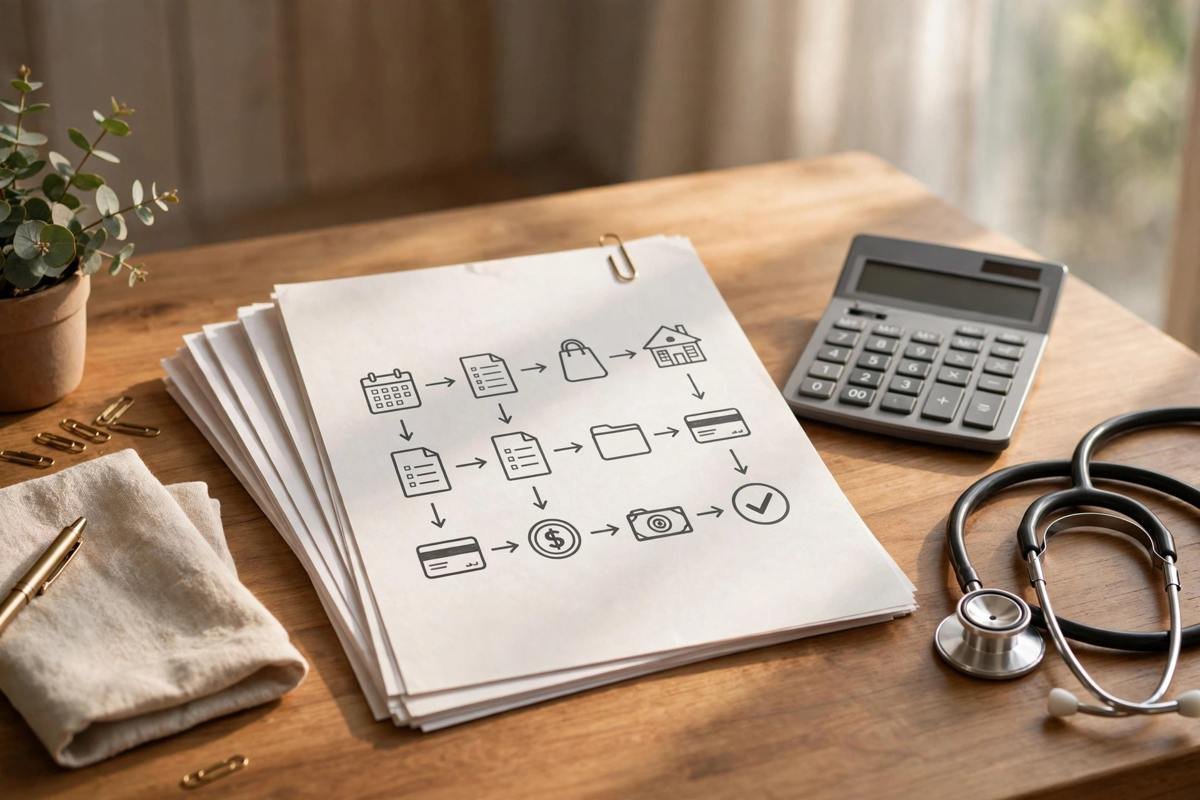
A corrected claim explained simply is a new version of an original claim, marked as a correction, that replaces the earlier submission with complete or corrected information, without starting the whole billing process over from scratch. It is not a second bill for the same service, and it is not an appeal. It is the same claim, fixed, and sent again through the payer system, so the payer can review the corrected information and decide payment again.
Understanding corrected claims helps patients follow a claim that seems to disappear and reappear, helps billing offices fix errors efficiently, and helps distinguish a correction from an appeal, which follows a different path and different deadlines.
This guide explains what a corrected claim fixes, how it differs from a resubmission, a duplicate claim, and an appeal, how it is marked and submitted, what deadlines apply, and what patients should watch for while a corrected claim is pending. It is general information about how claims work, not advice about any individual claim, and payer rules for corrections vary, so the specific claim instructions from your plan and billing office are the final guide for your case.
What a corrected claim is, and what it is not
A corrected claim is a claim submitted to replace a previously submitted claim, with changes to one or more elements, such as a code, a date, a provider identifier, a diagnosis, a charge, or a missing authorisation number, and with a marker that tells the payer system this is a correction, not a new claim for a new service.
That marker is essential. Without it, the payer system may treat the second submission as a duplicate claim for the same service on the same date, and deny it as a duplicate, even though the intention was correction. With the marker, and with a reference to the original claim number where required, the payer system knows to replace the original claim with the corrected version and to adjudicate the corrected version instead.
A corrected claim is still submitted on the standard claim form described on the Centers for Medicare and Medicaid Services CMS-1500 page, and if a corrected claim is still denied, the HealthCare.gov page on appealing an insurance company decision describes appeal rights.
A corrected claim is not an appeal. An appeal disputes a payer decision, such as a medical necessity denial, and argues, with evidence, that the decision should be reversed. A correction fixes an error in the claim itself, such as a wrong code or a missing field, and asks the payer to review the corrected claim on its merits. The distinction matters, because corrections and appeals follow different forms, different deadlines, and different review paths.
Sending an appeal when a correction is needed wastes time, because the appeal reviewer will still face the same claim error. Sending a correction when an appeal is needed also wastes time, because the corrected claim will be denied again for the same coverage reason, with the error now fixed but the decision unchanged.
A corrected claim is also not a duplicate claim. A duplicate claim is an identical resubmission of the same claim, without changes and without a correction marker, usually sent because the original claim was thought lost or not received. Duplicates are generally denied as duplicates, and they do not advance the claim. A corrected claim, by contrast, contains a change, carries a correction marker, and is intended to replace the original. That change plus marker combination is what distinguishes a useful correction from a confusing duplicate.
What a corrected claim can fix
Corrected claims fix claim errors that are correctable on the claim itself. Common examples include a wrong or incomplete diagnosis code, a wrong or incomplete service code, a mistyped date of service, a wrong provider identifier, a missing or wrong place of service, a missing authorisation number that has since been obtained, a wrong charge, a missing modifier where the documentation supports it, and a coordination of benefits error where the wrong plan was billed first or where primary plan information was missing. In each case, the underlying care and documentation support the corrected information, and the correction simply aligns the claim with the record.
Corrected claims can also fix claims that were denied for missing information, where the missing information can now be supplied on the claim itself, such as a missing field or a missing code detail. In those cases, the correction supplies what the payer asked for, and the payer reviews the corrected claim as a complete claim. That is different from a denial for medical necessity, where the information needed is clinical evidence for an appeal, not a claim field correction.
Knowing which type of denial you face decides whether a corrected claim or an appeal is the right next step, and the denial letter, with its reason code, is the best guide to that decision.
Corrected claims cannot fix everything. They cannot create a service that was not performed, add a diagnosis that was not documented, change a date to a date when no visit occurred, or alter a charge to a figure not supported by the fee schedule and the record. Those changes would not be corrections. They would be misrepresentations, and they can lead to repayment, penalties, and compliance consequences. A legitimate correction always traces back to the clinical note and to the provider records for that date.
How a corrected claim is submitted
Submission of a corrected claim follows payer specific rules, but the general pattern is consistent. The billing office creates a new claim that copies the original claim, changes only the elements that need correction, adds the correction marker required by that payer, and includes the original claim reference number where the payer requires it. Some payers require the correction marker in a specific field, some require a specific frequency code, and some require the original claim number in a specific field.
Those details vary, and billing offices follow the payer companion guide or submission instructions for each payer, because a correction sent in the wrong format may be rejected as a duplicate or as an invalid submission.
The corrected claim is then submitted electronically, in the same standard format as the original, and it enters the payer system as a replacement claim. The payer system should void or replace the original claim adjudication, and adjudicate the corrected claim afresh, applying eligibility, coverage, coding, and payment rules to the corrected information. That fresh adjudication can result in payment, partial payment, a new denial for a different reason, or a request for additional information, depending on the corrected claim and the payer rules. A corrected claim is therefore not a guarantee of payment. It is a second review, on corrected facts.
Timing of submission matters. Corrected claims are subject to timely filing limits, measured from the date of service, and sometimes to a separate correction window measured from the original claim decision. Those limits vary by payer and by contract, and they can be shorter than patients expect. A correction submitted after the limit may be denied for lateness, even if the correction itself is accurate. Billing offices therefore prioritise corrections, especially where the original claim was denied, because the correction clock runs alongside the appeal clock, and missing one can affect the other.
Corrected claim versus appeal: choosing the right path
Choosing between a corrected claim and an appeal starts with the denial reason. If the denial reason points to a claim error, such as a coding error, a missing field, a wrong date, or a missing authorisation number that can now be supplied, a corrected claim is usually the right path. Fix the error, mark the claim as corrected, reference the original, and resubmit.
If the denial reason points to a coverage or medical necessity decision, such as a service not covered for that diagnosis, a service not meeting medical policy criteria, or a service deemed experimental, an appeal is usually the right path, with clinical evidence organised around the payer policy.
Sometimes both paths are needed in sequence. A claim may first need correction, to fix a coding error, and then need appeal, if the corrected claim is still denied on necessity grounds. In that sequence, correction comes first, because an appeal of an uncorrected claim will face the same error again. Sometimes the denial letter is ambiguous, and the billing office or plan must be asked directly whether a corrected claim is accepted for that denial, and whether an appeal is also required or would be premature. That single clarification call often saves a whole cycle of wasted submissions.
Patients can help the choice by providing accurate information promptly when the billing office asks for it, such as an updated insurance card, a corrected date of birth, or confirmation of a second plan. Those patient supplied corrections are among the most common corrected claim fixes, and they depend on the patient responding quickly to a billing office request, before a filing deadline passes. Keep contact details current with every provider, so correction requests reach you in time.
What patients see while a corrected claim is pending
While a corrected claim is pending, patients often see confusing paperwork. The original EOB may show a denial or a partial payment, the corrected claim may not yet appear on a new EOB, and a provider bill based on the original EOB may arrive before the corrected EOB is issued. That sequence is normal, but it requires care.
Do not pay a bill based on an original, denied claim if a corrected claim is pending and the billing office has confirmed the bill will be adjusted after the corrected decision. Ask the billing office, in writing where possible, whether the balance is held pending correction, and when a revised bill can be expected.
Also watch for duplicate bills during the correction period. A corrected claim should replace the original claim, not create a second, separate bill for the same service. If you receive two bills for the same date and service, one based on the original claim and one based on the corrected claim, raise it with the billing office, with both bills and both EOBs in hand, so the duplicate can be voided. Similarly, if a payment you made on the original bill needs to be applied to the corrected balance, ask how that payment will be credited, and keep the payment receipt as proof.
Once the corrected claim is adjudicated, you should receive a revised EOB, showing the corrected claim decision, with new allowed, paid, and patient responsibility figures, and a revised provider bill matching the revised EOB patient responsibility. Compare the revised documents with the originals, line by line, and check that only the corrected elements changed, and that no new error was introduced in the correction itself. Corrections, like original claims, can contain errors, and a second correction is sometimes needed, within the filing limits, to fix a first correction that was itself incomplete.
For the wider denial picture, see Why Medical Claims Get Denied. That guide explains denial types and how to tell a correction case from an appeal case. For the claim journey as a whole, see What Is Medical Billing. That guide explains where correction sits between initial adjudication and final payment.
Corrected claim versus appeal: a decision check
Corrected claim explained clearly starts with choosing the right path, because a corrected claim and an appeal fix different problems. Use a corrected claim when the original claim had an error that can be fixed from the existing record, such as a wrong date, a wrong code supported by the note, or a missing detail that the note already contains.
Use an appeal when the original claim was correct as submitted, but the payer decision was wrong under the plan rules, such as a medical necessity denial where the documentation already supports the service. Sending an appeal for a simple error wastes time, and sending a corrected claim for a decision dispute can be returned as the wrong channel.
Ask the billing office or the plan, in writing, which channel applies to your case, and note the deadline for that channel, because corrected claims and appeals often have different time limits in the US system. Do not send both at once for the same line without advice, because a duplicate submission can create a duplicate denial.
Frequently asked questions
Is a corrected claim the same as appealing a denial
No. A corrected claim fixes an error in the claim itself and asks for a fresh review on corrected facts. An appeal disputes a payer coverage or necessity decision and argues, with clinical evidence, that the decision should be reversed. The two paths use different forms, deadlines, and review standards, and choosing the wrong path wastes time.
How long do I have to submit a corrected claim
It depends on the payer timely filing limit, measured from the date of service, and sometimes on a separate correction window from the original decision. Those limits vary, so ask the billing office and the plan for the specific deadline for your claim, and do not assume a general timeframe from an article.
Will a corrected claim guarantee payment
No. A corrected claim guarantees a fresh review on corrected facts, not a payment outcome. The payer still applies coverage, coding, necessity, and payment rules to the corrected claim, and it can pay, pay in part, deny for a different reason, or request more information, depending on the corrected facts.
What should I do if I receive a bill while a correction is pending
Ask the billing office whether the balance is held pending correction, and whether you should wait for a revised bill based on the corrected EOB. Do not pay a bill based on a denied original claim without that clarification, and keep all EOBs, bills, and payment receipts together, by claim and by date, so any duplicate or adjustment can be traced.
Sources
- Centers for Medicare and Medicaid Services, Professional paper claim form (CMS-1500)
- HealthCare.gov, Appealing an insurance company decision
For denial context, read Why Medical Claims Get Denied, and for the claim journey, read What Is Medical Billing.