Back strength core habits are everyday habits, not gym achievements. The core is not only the abdominal muscles at the front of the body. It is a group of muscles around the trunk, including abdominal muscles, back muscles, pelvic floor muscles, and hip muscles, that work together to support the spine during everyday movements: standing, sitting, walking, lifting, bending, and reaching. When those muscles are reasonably strong, flexible, and coordinated, everyday movements feel more supported. When they are weak, stiff, or uncoordinated, the back may feel more vulnerable during ordinary tasks.
This guide explains core habits in plain language, with simple movements and daily habits that most people can try, and with clear guidance on when to stop and seek care. It is general information only, not a personal exercise programme, and it does not replace advice from your own clinician or physiotherapist, especially if you have chronic back pain, a spine condition, recent injury, surgery, or any neurological symptoms.
What the core does during everyday life
The core acts like a supportive corset around the spine, but a living, adjustable one. When you lift a bag, reach overhead, stand from a chair, or walk on uneven ground, core muscles activate to stabilise the trunk, so that movement happens smoothly and load is shared across muscles and joints, rather than concentrated on the spine alone. That stabilisation is not about holding the belly tight all day. It is about muscles activating at the right time, with the right amount of effort, for each movement.
Core strength also supports posture. Good posture is not a rigid, military straightness held all day. It is a balanced position in which the head sits over the shoulders, the shoulders sit over the hips, and the spine curves naturally, with muscles working gently to maintain that balance, rather than straining to hold an unnatural position. Core habits that support posture therefore include both strengthening and flexibility, and both movement and rest, because a core that is strong but stiff, or flexible but weak, supports less well than a core that is both reasonably strong and reasonably mobile.
Everyday support also depends on hips and legs, not only on the trunk. Strong hip and leg muscles help with lifting, standing, and walking, reducing the load the back must carry alone. Core habits that ignore hips and legs miss half the picture. Simple habits such as standing from a chair using leg muscles, rather than pulling with the back, and stepping close to a load before lifting it, are core habits in the practical sense, even though they do not look like core exercises.
Start gently, and build a habit before intensity
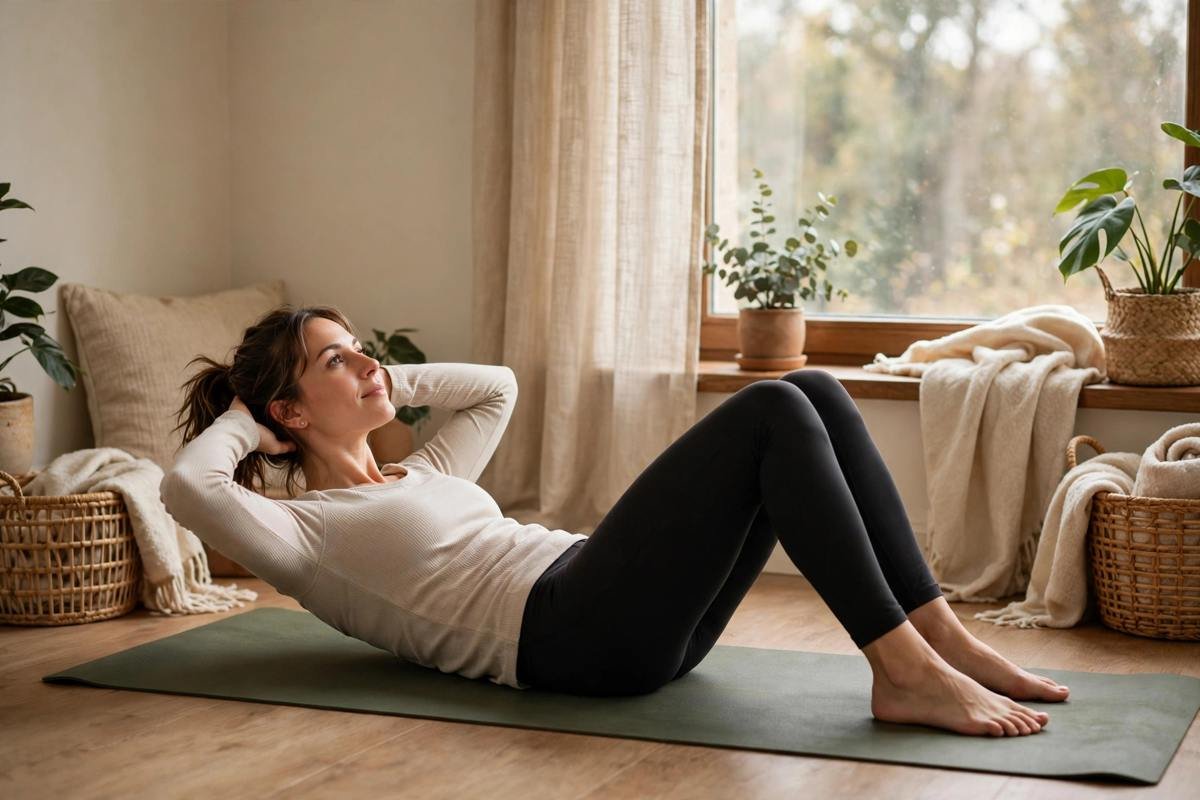
If you are new to core practice, or returning after a period of inactivity or pain, start with gentle activation and short sessions, not with intense exercises. A useful starting point is to lie on your back with knees bent, feet flat, and to practise gently drawing the belly button toward the spine, without holding your breath, while breathing normally. Hold that gentle activation for a few seconds, release, and repeat a few times. The effort should feel light, perhaps a third of maximum effort, not a strain. If it causes pain, stop and discuss it with your clinician before continuing.
Another gentle starting habit is to practise good standing and sitting posture for short periods, with attention to the natural curves of the spine, rather than forcing a flat back. Sit with feet flat, hips slightly higher than knees if possible, and shoulders relaxed, and stand with weight balanced between both feet. Short, frequent posture checks through the day, for example each time you stand from a chair, build awareness more effectively than a single long posture session.
Build frequency before intensity. A few minutes of gentle core practice most days, sustained for weeks, builds a habit and a base of strength and coordination. Intense exercises done rarely, especially when they cause soreness or pain that lasts days, do not build a sustainable habit and can set back progress. If soreness lasts more than a day or two, or if pain worsens, reduce intensity, shorten sessions, and seek advice if pain persists.
Simple core movements for everyday support
Several simple movements support everyday back function, when done gently and with good form. Bridges, done lying on your back with knees bent, lifting hips gently until shoulders, hips, and knees form a straight line, then lowering slowly, strengthen gluteal and back muscles that support the pelvis. Start with a few repetitions, hold briefly at the top only if comfortable, and lower with control. Keep breathing normally throughout, and stop if pain appears.
Bird dog, done on hands and knees, extending one arm forward and the opposite leg back, then returning to start, trains coordination and stability, because it requires core muscles to keep the trunk steady while limbs move. Start with short holds, a few seconds, and only extend as far as you can while keeping the trunk steady and the back from sagging or arching excessively. If balance is difficult, start with arm only or leg only, and build to combined movement gradually.
Dead bug, done lying on your back with arms toward the ceiling and knees bent, lowering one arm overhead and the opposite leg toward the floor, then returning, trains core control while limbs move, similar to bird dog but in a supported position. Keep the lower back gently in contact with the floor, move slowly, and only lower as far as you can while maintaining that contact and breathing normally. Short, controlled repetitions are better than long, strained ones.
Planks, done in a modified form if needed, such as on knees rather than toes, train trunk stability in a straight line position. Start with very short holds, perhaps ten to twenty seconds, with good form, rather than long holds with sagging hips or held breath. Form matters more than duration, and a short plank with a straight trunk and normal breathing supports more than a long plank with poor form.
Walking, swimming, and gentle cycling also support core function indirectly, because they require trunk stability during movement, and because they build general fitness and hip and leg strength. The Centers for Disease Control and Prevention arthritis programme notes that regular physical activity, including walking, swimming, and cycling, can reduce pain, improve function, and support daily activities for people with arthritis, and similar general activity benefits apply to back support, provided activity is introduced gradually and pain is respected.
Posture, sitting and lifting habits through the day
Core habits are not only exercises. They are also how you sit, stand, lift, and move through the day. For sitting, change position regularly, ideally every half hour, even if only to stand, stretch gently, and sit again. A single perfect sitting position held for hours is less supportive than several comfortable positions changed regularly, because movement itself nourishes joints and muscles and prevents stiffness from prolonged stillness.
For standing, distribute weight evenly, avoid locking knees, and shift weight occasionally. For lifting, step close to the load, bend at hips and knees rather than rounding the back excessively, keep the load close to the body, and avoid twisting while lifting. If a load is heavy, awkward, or above shoulder height, ask for help or use equipment, rather than lifting alone with poor form. Those lifting habits protect the back more reliably than any single exercise, because lifting injuries often happen during a rushed, awkward lift, not during a planned exercise session.
For sleeping, a supportive mattress and a comfortable sleeping position, often on the side with a pillow between knees, or on the back with a pillow under knees, can reduce morning stiffness for some people. There is no single best sleeping position for everyone, and comfort and pain the next morning are better guides than a prescribed position. If morning stiffness is persistent or worsening, discuss sleeping position and mattress support with your clinician, rather than assuming a new mattress alone will resolve back pain.
Movement, rest and pacing together
Back support requires a balance of movement and rest, not movement alone. Gentle, regular movement supports strength, flexibility, and circulation, while rest allows recovery after activity or a flare. Pacing, meaning breaking activity into manageable chunks with rest breaks, rather than doing everything at once and then collapsing, is a core habit in the practical sense, because it prevents the boom and bust cycle in which a good day leads to overactivity, which leads to a flare, which leads to prolonged rest and deconditioning.
A simple pacing habit is to set a time or task limit before starting an activity, such as gardening, cleaning, or walking, and to stop at that limit even if you feel good, rest briefly, and then decide whether to continue. That habit feels counterintuitive on a good day, but it protects the next day, and over weeks it often allows more total activity than a pattern of overactivity followed by forced rest.
Also notice the difference between muscle effort soreness, which is mild and settles within a day or two, and sharp, shooting, or worsening pain, numbness, weakness, or pain that radiates down a leg, which deserves prompt discussion with a clinician. This guide does not diagnose those symptoms, but it flags them as reasons to pause exercise and seek advice, rather than pushing through.
When to seek care, and what to ask
Seek prompt care for back pain following significant trauma, for pain with fever, unexplained weight loss, numbness or weakness in legs, loss of bladder or bowel control, or pain that is severe, worsening, or does not improve with rest and gentle activity over a reasonable period. Those patterns need medical assessment, not continued exercise alone. Also seek care if back pain is new, if it changes pattern suddenly, or if it is accompanied by other concerning symptoms.
At a routine visit, useful questions include: which core movements are appropriate for my back history, and which should I avoid. How should I progress intensity and duration over weeks. Are there hip or leg strength habits that would help my back specifically. How should I pace activity during a flare, and when should I return for review if pain worsens. Bring a note of which movements help, which worsen pain, and how long soreness lasts after each, because that record helps a clinician tailor advice to your pattern.
For back pain context and flare management, see Chronic Lower Back Pain Relief on this site, and for arthritis related joint habits, see Manage Arthritis Flare Ups. Those guides complement this core habits guide by covering pain patterns and flare responses, while this guide focuses on everyday support habits.
Closing links
Core habits are everyday habits: gentle activation, simple movements done well, posture changes, safe lifting, and pacing that balances movement with rest. Start gently, build frequency before intensity, and seek advice if pain worsens or new symptoms appear. Over weeks, those small, consistent habits often support the back more than occasional intense effort.
Frequently asked questions
What is the core, in simple terms?
The core is a group of muscles around the trunk, including abdominal, back, pelvic floor, and hip muscles, that work together to stabilise the spine during everyday movements such as standing, sitting, walking, lifting, and reaching.
How often should I practise core habits?
Start with a few minutes of gentle practice most days, and build frequency before intensity. Short, regular practice, sustained for weeks, builds habit and base strength more reliably than intense sessions done rarely.
Is walking enough for back support?
Walking supports general fitness, hip and leg strength, and trunk stability during movement, and it is a valuable core habit, especially when combined with simple core movements and safe lifting and posture habits. Discuss your specific back history with your clinician to tailor the mix.
When should I stop core exercises and seek care?
Stop and seek advice for sharp, shooting, or worsening pain, numbness or weakness, pain radiating down a leg, pain after trauma, pain with fever or unexplained weight loss, or loss of bladder or bowel control. Those patterns need medical assessment, not continued exercise.
Related guides on this site
- Chronic Lower Back Pain Relief: Everyday relief habits to pair with core strength work.
- How to Manage Arthritis Flare-Ups: Pacing and flare care when back and joint symptoms overlap.
A ten minute daily core routine, built in stages
Start with stage one for two weeks: gentle belly bracing while lying down, slow pelvic tilts, and short bridges, each held for five seconds and repeated five times, with normal breathing throughout. Move to stage two only if stage one feels comfortable: the same moves with longer holds, plus a bird dog movement on hands and knees, lifting one arm and the opposite leg slowly while keeping the hips level. Stage three adds standing balance work, such as standing on one leg while holding a chair for support, and slow sit to stand practice from a firm chair.
Stop any move that causes sharp pain, numbness, or pain that travels down a leg, and discuss that symptom at a visit rather than pushing through it. Do the routine at the same time each day, and track two things only: how many days you completed it, and whether everyday tasks such as lifting, bending, or standing felt easier after four weeks.