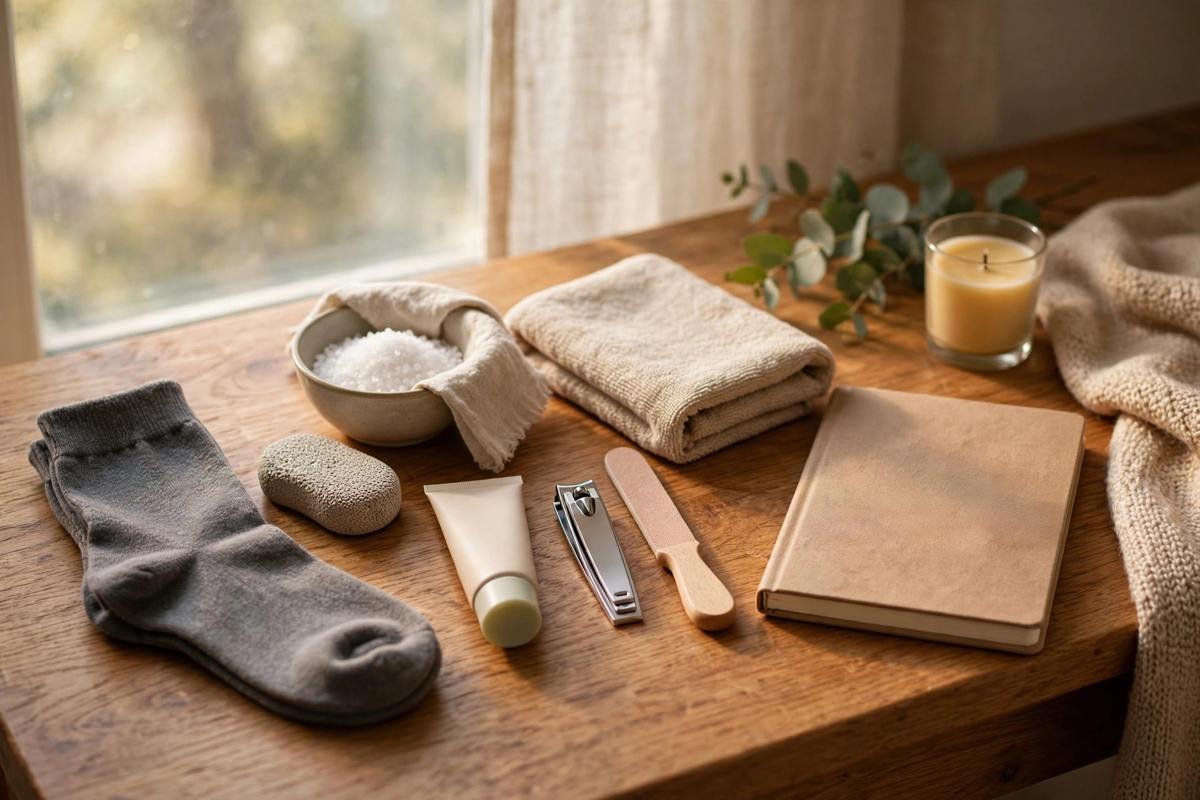
Quick answer: diabetes foot care routine means checking your feet every day, washing with lukewarm water, drying carefully between toes, moisturizing dry skin but not between toes unless advised, trimming nails straight across or having a foot specialist trim them if vision or sensation is reduced, wearing clean socks and well fitting shoes at all times including indoors, checking inside shoes before putting them on, and contacting your clinician promptly for any cut, blister, sore, redness, swelling, warmth, or color change. Diabetes can damage nerves and blood vessels in feet, reducing feeling, so a small injury you cannot feel can become a serious ulcer if missed.
Why daily checks matter more than occasional checks
Nerve damage from diabetes, called neuropathy, can reduce pain, temperature, and touch sensation in feet. That means a blister from a tight shoe, a cut from walking barefoot, a pebble inside a shoe, or a burn from hot pavement may go unnoticed for days. Reduced blood flow also slows healing, so a small sore can worsen quickly, become infected, and in severe cases lead to hospital care. Daily visual checks compensate for reduced feeling: you look for what you cannot feel.
Check both feet every day, at the same time, for example after a shower or before bed, when the routine is easiest to remember. If you cannot see the soles well, use a long handled mirror, a phone camera, or ask a family member or caregiver to help. Do not skip the check on days when feet feel fine, because feeling fine is exactly when an unfelt injury is most likely to be missed.
The daily routine, step by step
First, inspect tops, sides, soles, heels, and between toes. Look for dry cracked skin, blisters or sores, bruises or cuts, redness, warmth, tenderness, swelling, firm or hard spots, calluses or corns, nail changes, color changes, and any new shape change. Compare feet with each other, because a difference between feet, such as one foot redder, warmer, or more swollen than the other, is often more informative than either foot alone.
Second, wash feet every day with lukewarm water and mild soap. Check water temperature with your hand or elbow first, because reduced sensation can prevent you from feeling water that is too hot. Do not soak feet for long periods, especially if sensation is reduced, because prolonged soaking can dry skin and increase injury risk. Dry feet gently, especially between toes, because moisture between toes encourages fungal infection.
Third, moisturize dry skin with lotion, petroleum jelly, lanolin, or oil, but do not put lotion, oil, or cream between toes unless your clinician instructs you to, because trapped moisture there encourages infection. Use a pumice stone gently after a shower for corns or calluses only if your foot specialist has given you permission to do so. Do not use medicated pads, and do not try to shave or cut corns or calluses away at home, because cutting can create a wound that heals poorly.
Fourth, care for nails safely. Ask your clinician to show you how to trim toenails. Generally, trim straight across, not curved, so nails are less likely to become ingrown, and make sure the edge does not press into the next toe. Soaking briefly in lukewarm water to soften nails before trimming is commonly advised, but follow your clinician instructions for your situation. Do not try to cut very thick toenails yourself. If toenails are thick and discolored, possibly from fungal infection, if vision is poor, or if sensation is reduced, have a podiatrist trim nails to prevent injury.
Fifth, dress feet for protection. Wear clean, dry socks or non binding hosiery every day, change socks if they become damp, and avoid socks with tight elastic or seams that press on toes. Wear shoes at all times to protect feet, including indoors, and never walk barefoot, particularly on hot pavement, hot tiles, or hot sand, because burns can occur without pain warning. Before putting shoes on, always check inside for stones, nails, rough seams, or objects that could injure feet.
Wear shoes that are comfortable and fit well when you buy them, never buy tight shoes expecting them to stretch, because pressure from tight shoes causes blisters and sores you may not feel. Break in new shoes slowly, wearing them one or two hours a day for the first one or two weeks, and change broken in shoes after about five hours during the day to change pressure points. Avoid flip flop sandals and stockings with seams, both of which create pressure points.
A sample daily checklist to keep by the bed or in the bathroom
Tops checked, soles checked with mirror, heels checked, between toes checked and dried, any cut, blister, redness, swelling, warmth, or color change noted with date, nails checked, socks clean and dry, shoes checked inside, shoes fit without rubbing. If any item is abnormal, note it, photograph it if helpful for a clinician call, and contact your clinician that day rather than waiting for the next routine visit, because early assessment prevents most serious foot complications.
At clinician visits, remove shoes and socks so feet can be checked, and mention any foot changes, even if they seem minor, plus any new numbness, tingling, burning, pain, or color or temperature changes. A comprehensive foot examination at least annually, with more frequent checks for higher risk individuals, is standard diabetes care, and it includes skin, sensation, circulation, foot shape, and footwear fit assessment.
Footwear: what to look for, and what to avoid
Look for shoes with a wide, rounded toe box, soft upper, cushioned sole, low heel, and a fastening that adjusts, such as laces or straps, so fit can be adjusted through the day as feet swell slightly. Shop for shoes later in the day, when feet are slightly larger, and try both shoes, walking in them before buying. Ask your clinician whether you need special therapeutic shoes, especially if you have numbness, calluses, foot deformity, or a past foot ulcer, because those situations need footwear chosen with a clinician or podiatrist, not from a general guide alone.
Avoid narrow pointed shoes, high heels, flat unsupportive shoes for long walking, and shoes with rough interior seams. Avoid heating pads and hot water bottles on feet, because reduced sensation can lead to burns without warning. If feet are cold, wear warm socks, and do not stay out in cold for long, because cold also reduces circulation and sensation further.
When to contact a clinician promptly, and when to seek urgent care
Contact your clinician right away about any foot problem, and do not try to treat it yourself, if you notice redness, increased warmth, swelling, sores or cracks, tingling or burning, pain, new blisters, ingrown nails, fungal infection that is not improving, callus with dried blood, or a wound that is not improving after a few days. Seek urgent care for rapidly spreading redness, severe swelling, black or blue tissue, pus or drainage with fever or chills, severe pain, or a wound that looks significantly infected, because a painless wound can still be serious when sensation is reduced.
Smoking reduces blood flow to feet, so if you smoke, ask your clinician about quitting support, because quitting improves foot healing and circulation over time.
Foot care through the seasons: summer heat and winter cold
Summer heat creates risks that a daily routine must adapt to. Never walk barefoot on hot pavement, hot tiles, or hot sand, because reduced sensation can prevent you from feeling a burn until damage is done. Wear protective shoes and socks even at the beach or by a pool, and check feet after time outdoors for redness, blisters, or swelling from heat and from tight sandals. Stay hydrated and change damp socks promptly, because sweat and moisture between toes encourage fungal infection. If feet swell in heat, shoes that fit in the morning may feel tight by afternoon, so choose adjustable fastenings and check fit again later in the day.
Winter cold creates the opposite risk. Cold reduces circulation and sensation further, so feet can become cold without clear warning. Wear warm socks and well fitting closed shoes outdoors, avoid prolonged time in cold without checking feet, and never use heating pads, hot water bottles, or direct heat on feet to warm them, because burns can occur without pain warning. Warm feet gradually with warm socks and indoor warmth, and check for color changes after coming indoors, such as unusual paleness, redness, or blue tinge that does not fade. If feet remain cold, numb, or discoloured despite warming, contact your clinician, because circulation changes deserve evaluation, not just warmer socks.
Foot care when travelling
Travel disrupts routines, so pack a foot care kit before you leave: a mirror or phone for sole checks, moisturizer, clean socks, well fitting broken in shoes, and a second pair of shoes to change pressure points during the day. Do not start a trip in brand new shoes, because blisters on a trip are harder to treat promptly, and a new shoe problem can become a sore before you reach care. Break in new shoes at home for one or two weeks first, wearing them an hour or two a day, and bring the older comfortable pair as backup.
During travel, keep the daily check, even on busy sightseeing or visiting days, at the same time each evening. Check inside shoes before putting them on, especially after shoes have been left in a hotel room or outdoors, where small objects can enter. On long flights or drives, move feet and ankles periodically, stand and walk when possible, and wear socks that are not tight at the top, because prolonged sitting reduces leg circulation.
If a foot problem appears while travelling, contact a clinician promptly by phone where possible, photograph the problem for the call if helpful, and seek local care for rapidly spreading redness, severe swelling, pus, fever, or black or blue tissue, rather than waiting until you return home.
What to do in the first hours after you find a problem
Finding a cut, blister, sore, redness, or swelling can feel alarming, and a calm first response helps. Note the problem, the date, and which foot and location, and photograph it if that helps a clinician call. Keep the area clean with lukewarm water and mild soap, dry gently, and cover with a clean dry dressing if advised by your clinician, without applying medicated pads or cutting away skin. Do not try to treat the problem yourself with home cutting, chemical removers, or prolonged soaking, because those steps can worsen a wound that heals poorly.
Contact your clinician that day, even if the problem looks small, and describe it clearly: location, size, color, redness, warmth, swelling, drainage, pain or lack of pain, and any fever. Ask whether you should be seen that day, whether a photo review is enough for now, and what to watch for overnight. Seek urgent care sooner for rapidly spreading redness, severe swelling, black or blue tissue, pus with fever or chills, or severe pain.
While waiting for care, protect the foot: wear clean socks and well fitting shoes, avoid pressure on the sore area where possible, and do not walk barefoot. Early contact, not home treatment, is what prevents most small foot problems from becoming serious complications.
Common mistakes that undo a good routine
Skipping checks on good days is the most common mistake, because unfelt injuries are most likely to be missed when feet feel fine. Walking barefoot indoors is another, because even a clean home has small objects, rough floors, and hot surfaces. Using heating pads or hot water bottles on feet is a third, because burns occur without warning when sensation is reduced. Cutting calluses or using chemical removers at home is a fourth, because a small cut can become a poorly healing wound.
Buying tight shoes and hoping they stretch is a fifth, because pressure blisters form before stretching ever helps. Each mistake is easy to avoid once named, and avoiding them matters as much as the daily check itself, because a routine that is followed most days, plus avoidance of these traps, protects feet far better than a perfect routine followed for a week and then abandoned.
Frequently asked questions
Should I check my feet even if they feel normal?
Yes, every day. Reduced sensation means feeling normal does not rule out injury. Visual inspection catches cuts, blisters, redness, and pressure areas that feeling alone would miss.
Can I walk barefoot indoors if my home is clean?
No, not if you have diabetes with reduced sensation. Even indoors, small objects, rough floors, and hot surfaces can injure feet without pain warning. Wear clean socks and protective slippers or shoes indoors as well as outdoors.
Should I cut my own calluses?
No, unless your foot specialist has specifically given you permission and shown you how. Cutting calluses or using chemical removers can damage skin and create wounds. A clinician or podiatrist can treat calluses more safely and identify the pressure causing them.
Does a diabetic foot ulcer always hurt?
No. Neuropathy can reduce sensation enough that an ulcer causes little or no pain. That is why daily visual checks and prompt care for any sore, even a painless one, are essential.
Related reading on this site
For what A1C ranges mean, read What Is a Normal A1C Level?.