
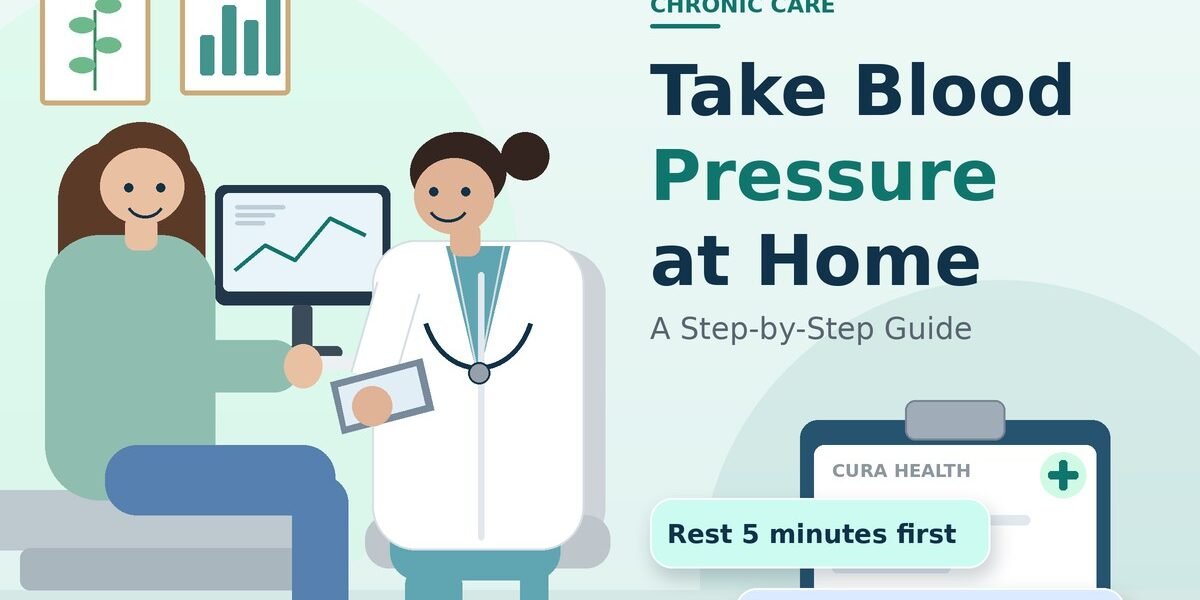
Quick answer: use a validated upper-arm monitor with the right cuff size. Sit quietly for five minutes with your back supported, feet flat and arm resting at heart level. Take two readings one minute apart, once in the morning and once in the evening, for seven days, and write them all down.
Home readings matter because blood pressure changes through the day, and a single reading in a clinic can be higher (from nerves) or lower than what you really live with. A week of careful home readings gives your doctor a far better picture.
Choose the right monitor
- Upper-arm cuff, automatic. The American Heart Association recommends this type over wrist or finger devices, which are less reliable.
- Validated device. Look for a monitor that has been tested for accuracy. The US site validatebp.org lists validated models.
- Correct cuff size. A cuff that is too small gives falsely high numbers. Measure around the middle of your upper arm and check the size chart on the box.
- Bring it to your next appointment so your doctor can compare it with their own device. Many doctors suggest checking the monitor once a year.
Before you measure
For 30 minutes beforehand, avoid:
- Smoking
- Caffeine (coffee, tea, energy drinks)
- Exercise
- Alcohol
- Eating a large meal
Empty your bladder first, because a full bladder can raise your reading. Take your morning reading before your morning medicine unless your doctor tells you otherwise.
Get into position
1. Sit in a chair with your back supported. 2. Keep both feet flat on the floor and legs uncrossed. 3. Rest your arm on a table so the cuff sits at heart level (middle of the chest), palm facing up. 4. Wrap the cuff on your bare upper arm, just above the bend of the elbow. Don’t roll up a tight sleeve. 5. Rest quietly for five minutes. No phone, no TV, no talking.
Take the readings
Press the button and keep still and silent until the monitor finishes. Wait one minute, then take a second reading. Write down both. Do this in the morning and again in the evening for seven days. Your doctor will usually work out the average, so don’t throw away any reading, even the odd ones.
A simple log
| Date | Time | Reading 1 | Reading 2 | Notes (medicine, stress, coffee) |
|---|---|---|---|---|
| Mon | 7:30 am | |||
| Mon | 8:00 pm |
Add a note if you were rushed, in pain, or had coffee. Context helps your doctor interpret the numbers.
Common mistakes that give wrong readings
- Measuring right after climbing stairs, a walk or a stressful call
- Crossing your legs or letting your arm hang down
- Talking, scrolling on a phone or watching TV during the reading
- Putting the cuff over clothing
- Using a cuff that doesn’t fit
- Testing only when you feel unwell or only when you feel fine
- Taking one reading and stopping
What do the numbers mean?
The American Heart Association categories for adults are:
| Category | Top number (systolic) | Bottom number (diastolic) |
|---|---|---|
| Normal | Below 120 | and below 80 |
| Elevated | 120-129 | and below 80 |
| High blood pressure, stage 1 | 130-139 | or 80-89 |
| High blood pressure, stage 2 | 140 or higher | or 90 or higher |
| Hypertensive crisis | Above 180 | and/or above 120 |
A home monitor can’t diagnose high blood pressure on its own. Your doctor decides using repeated readings, and may set a slightly different home target for you.
When to act quickly
If a reading is above 180/120, rest for five minutes and measure again. If it is still that high with no symptoms, call your doctor right away. If it comes with chest pain, shortness of breath, back pain, numbness, weakness, vision changes or trouble speaking, call your local emergency number. Read more in our guide to what blood pressure is dangerous.
If you are on medicine, don’t stop or change it because home readings look good. Tell your doctor and let them decide.
Next steps
If your numbers are often above 130/80, book an appointment and bring your log. Our guide on how to lower blood pressure naturally covers the lifestyle side. If your readings are highest at waking, see why your blood pressure may be high in the morning.
Frequently asked questions
How often should I check my blood pressure at home?
If you’ve been told to monitor it, twice a day for seven days before an appointment is common. Otherwise your doctor may suggest a few times a week. Follow their advice.
Which arm should I use?
Use the same arm each time. At your first check, measure both arms. If there is a consistent difference, use the arm with the higher reading and tell your doctor.
Are wrist monitors accurate?
They can work if used with the wrist held at heart level, but upper-arm devices are generally more reliable and are preferred.
Why is my reading different every time?
Blood pressure naturally varies with breathing, activity, stress and time of day. That is why an average of several readings is more useful than any single one.

Cura Editorial Team
Contributor at Cura Health Journal.