
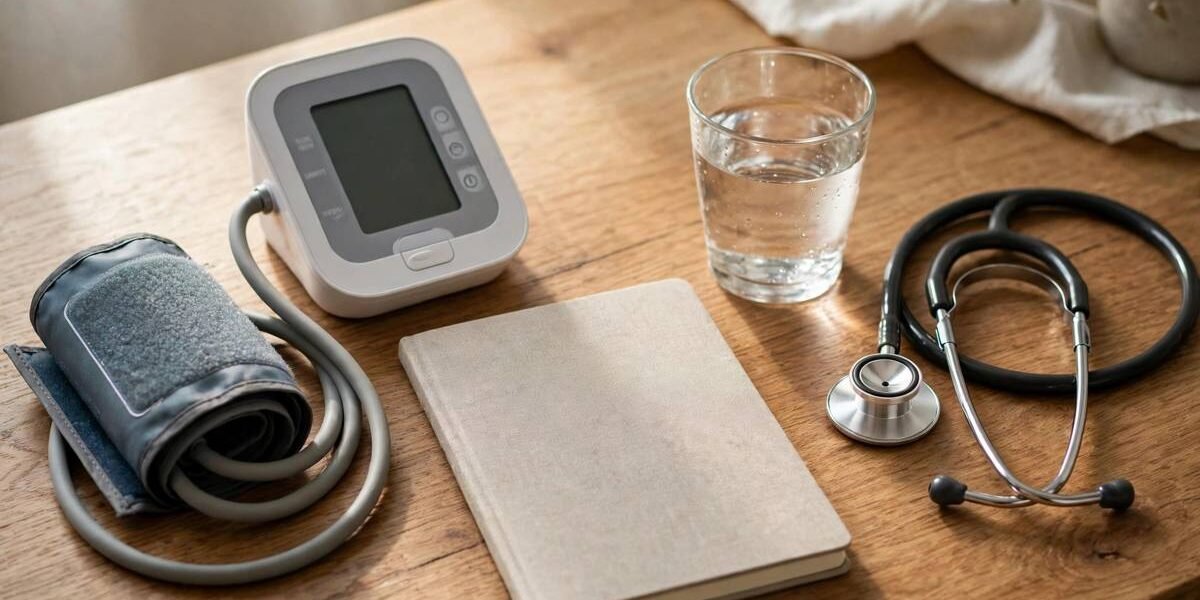
A daily routine for high blood pressure works best when it is simple enough to keep on an ordinary day, not just on a good day. Many people know the general advice, eat well, move more, take medicines as prescribed, and check readings, but struggle to fit those pieces together. A single reading can go up or down for many reasons, and one good week does not tell the whole story. What matters more is a steady pattern of small habits, repeated at roughly the same times each day, that you can keep for months.
This guide is about building that pattern. It does not replace advice from your own clinician, and it does not set a target reading for you. Your clinician knows your history, your medicines, and your other conditions, and any target or medicine change should come from that conversation. What this guide does is show how the pieces of a routine fit together, from the first hour of the morning to the last hour of the evening, so the routine feels manageable rather than overwhelming.
Why a routine matters more than a single reading
Blood pressure varies through the day. It rises and falls with activity, stress, food, sleep, and even the act of having it measured. That is why clinicians usually look at a pattern over time rather than a single number in isolation, and why home monitoring, when your clinician asks for it, is done at the same time each day and recorded in a log.
A routine helps in two ways. First, it makes the habits automatic. When a reading, a walk, and a medicine are tied to things you already do, such as waking up, eating breakfast, or brushing your teeth in the evening, you are less likely to forget them. Second, it makes your readings more useful. Readings taken at consistent times, in a consistent position, with a consistent technique, are easier for your clinician to interpret than readings taken at random times under very different conditions.
A routine also protects you from the all or nothing trap. If you miss a walk one day, the routine is still there the next day. If one reading is higher than expected, the routine gives you a calm next step, which is to record it accurately and discuss the pattern with your clinician, rather than changing a medicine dose on your own or taking extra readings in a panic. Never adjust a prescribed medicine because of a single home reading without speaking to your clinician first.
Start with your clinician, not with a new plan
Before you build or change a routine, check with your clinician about three things. First, whether home monitoring is useful for you, and if so, how often to measure and at what times. Second, what your personal target range is, and what pattern of readings should prompt a call. Third, whether any habit in this guide needs to be adapted for your other conditions, your medicines, or your physical abilities.
This step matters because high blood pressure often has no warning signs. The Centers for Disease Control and Prevention notes that measuring blood pressure is the only way to know whether you have high blood pressure, because it usually has no symptoms and many people do not know they have it. A routine built without that clinical conversation can miss the very thing it is meant to support, which is a plan that fits your situation.
If you already have a home monitor, take it to a visit so your clinician can check your technique and check the device against a clinic reading. A cuff that is the wrong size, or a technique that differs from the recommended steps, can produce readings that mislead you and your clinician. If you do not have a monitor, ask your clinician whether one would help, and what type is suitable, rather than buying the first device you see.
Morning: anchor the day in five calm minutes
Morning is the best anchor for a blood pressure routine, because it is the most repeatable part of most days. Choose a time that you can keep, for example soon after waking and before breakfast, and keep that time as consistent as you can.
Begin by sitting down and resting for a few minutes before you measure, if home monitoring is part of your plan. The Centers for Disease Control and Prevention advises sitting in a comfortable chair with your back supported for at least five minutes before a reading, keeping both feet flat on the ground with legs uncrossed, resting your arm on a table so the cuff is at chest height, placing the cuff on your bare upper arm so it fits snugly, and not talking while the reading is taken.
It also advises not eating or drinking anything in the half hour before a reading, and emptying your bladder beforehand. Those steps sound small, but they are the difference between a reading that reflects your usual state and a reading that reflects what you just ate, drank, or did.
Take at least two readings, a minute or two apart, and record both in a log, along with the time. A log can be a paper notebook, a simple phone note, or an app, as long as you use it consistently and can show it to your clinician. Note anything unusual next to a reading, such as illness, poor sleep, or a medicine change, so your clinician can interpret the pattern with context rather than guessing.
After the reading, take any morning medicines exactly as prescribed, at the same time each day. Tying medicines to a fixed morning anchor, such as breakfast or brushing your teeth, reduces missed doses. If you miss a dose, follow the instructions that came with your medicine or ask your clinician or pharmacist what to do, rather than doubling the next dose on your own.
Morning is also a good time for a short movement habit. A walk, gentle stretching, or another activity your clinician has approved can be part of the morning anchor, but keep it separate from the reading itself. Measure first, while you are still rested, then move. If you exercise first, wait and rest before you measure, so the reading is not simply a reflection of the activity you just finished.
Food through the day: low sodium habits that actually stick
Food habits for high blood pressure are often described in grand terms, but the daily version is much simpler. It is about the choices you make most days, not about a perfect meal on one day.
A heart healthy eating pattern, as described by major health agencies, emphasises vegetables, fruits, whole grains, and low fat dairy foods, with lean proteins such as fish, poultry, beans, and nuts, and with limits on saturated fat, added sugars, and salt. You do not need to adopt a named diet overnight to benefit from that pattern. Start by shifting the balance of your usual meals in that direction, one change at a time.
Low sodium habits deserve special attention, because salt is hidden in many everyday foods. The largest sources for most people are not the salt shaker, but processed foods, restaurant meals, breads, sauces, soups, and cured meats. Reading labels helps, because the sodium in a single serving can be much higher than expected. Cooking more meals at home, where you control the salt, is one of the most reliable ways to reduce sodium without feeling deprived. When you do eat out, ask about lower salt options, choose simpler preparations, and keep portions in mind.
A few practical low sodium habits that tend to stick are worth building into the routine. Taste food before adding salt, and use herbs, citrus, garlic, vinegar, and spices for flavour instead. Rinse canned beans and vegetables when the label shows they are packed in salted water, if your clinician or dietitian advises that step. Keep high sodium snacks out of easy reach at home, so the default choice is a lower sodium one. And build the habit of checking the label for one item each shopping trip, rather than trying to memorise every label at once. Small, repeated checks build label reading into a habit.
Alcohol also belongs in the food and drink part of the routine. If you drink, keep it within the limits your clinician advises, and note that alcohol can affect both blood pressure and sleep. If you are unsure what limit applies to you, ask your clinician rather than relying on a general figure from an article.
Movement: little and often beats heroic and rare
Movement is one of the most useful parts of a blood pressure routine, and also one of the easiest to overcomplicate. The goal is regular, moderate activity on most days, in a form you enjoy and can keep, with your clinician approval for the type and intensity that suits you.
Walking is the most accessible starting point for many people. A daily walk, even a short one, is easier to keep than a long workout done once a week and then abandoned. If a single longer walk does not fit your day, break movement into shorter pieces, such as a walk after lunch and another after dinner. Sitting less through the day also helps, so stand up and move briefly during long periods of sitting, whether at work, at home, or while watching television.
Build movement into the routine at fixed points, rather than leaving it to willpower at the end of a tiring day. A walk after lunch, a walk with a family member in the evening, or a short activity before dinner are all anchors that repeat without a fresh decision each day. If the weather or your schedule disrupts one walk, the next anchor is already in place, so the routine does not collapse.
If you have joint pain, breathing difficulty, chest discomfort, or another condition that limits movement, talk to your clinician about suitable activities before you start a new exercise plan. The right activity for you may be gentler, shorter, or different in kind from the examples here, and that is fine. A routine that respects your limits is a routine you can keep.
Evening: close the day the same way you opened it
Evening is the second anchor of a blood pressure routine. If your clinician has asked for evening readings, take them at the same time each evening, using the same seated position and technique as in the morning, and record them in the same log. Evening readings, taken consistently, give your clinician a fuller picture than morning readings alone.
Evening is also the time to review the day without judgement. Did you take medicines as prescribed? Did you move? Did you keep sodium in check most of the day? A short, honest review helps you spot patterns, such as missed evening doses, late heavy meals, or poor sleep, that may be affecting your readings. It is not a test to pass or fail. It is information for you and your clinician.
Sleep belongs in the evening routine too. A regular bedtime, a dark and quiet room, and a wind down period without screens or heavy meals close to bedtime all support better sleep, and better sleep supports steadier blood pressure patterns. If you snore loudly, wake gasping, or feel very sleepy during the day despite a full night in bed, mention that to your clinician, because sleep related breathing problems can affect blood pressure and need clinical assessment.
Take evening medicines at the same time each evening, tied to a fixed anchor such as dinner or brushing your teeth. If you use a pill organiser, fill it at a set time each week, so the organiser itself becomes part of the routine rather than a separate chore.
Home monitoring: technique, log, and what to share
Home monitoring deserves its own section, because it is the part of the routine where small errors have the largest effect. The Centers for Disease Control and Prevention guidance for accurate readings is worth repeating in full, because it is the standard to follow each time.
Do not eat or drink anything in the half hour before you measure. Empty your bladder before the reading. Sit in a comfortable chair with your back supported for at least five minutes before the reading. Keep both feet flat on the ground and your legs uncrossed. Rest your arm on a table so the cuff is at chest height. Place the cuff on your bare upper arm and make sure it fits snugly. Do not talk while your blood pressure is being measured. Measure at the same time each day. Take at least two readings, a minute or two apart. Record your readings in a log.
Bring that log to every visit, and bring the monitor itself from time to time so technique and device accuracy can be checked. Tell your clinician about any pattern that worries you, such as readings that are consistently higher in the evening, readings that vary widely from day to day, or symptoms that coincide with readings. Do not bring only the readings you like. A complete log, including higher readings, gives your clinician the honest picture needed to adjust a plan safely.
If a single reading is unexpectedly high and you feel well, rest for a few minutes and repeat the reading using the same technique, then record both readings and discuss the pattern with your clinician. If you have symptoms such as chest pain, severe breathlessness, sudden weakness, sudden vision change, or sudden severe headache, seek urgent care promptly rather than waiting for the next routine reading. Those symptoms need clinical assessment, not a home monitoring routine.
A sample day, to adapt rather than copy
The sample day below is an example of how the pieces fit together. Adapt the times and activities to your life and to your clinician advice, rather than copying it exactly.
In the morning, wake, sit and rest, take home readings if your clinician has asked for them, record them, take morning medicines as prescribed, and take a short walk or do another approved activity after the reading. At breakfast, choose foods in line with a heart healthy pattern, and keep added salt low.
Through the middle of the day, keep movement in small pieces, such as a walk after lunch, and keep sodium in check by choosing simpler meals and reading one label when you shop or cook. In the afternoon, stand and move briefly during long sitting periods, and drink water through the day as your clinician advises.
In the evening, take evening readings at the same time if your clinician has asked for them, record them, take evening medicines as prescribed, and review the day briefly. Wind down for sleep at a regular time, in a dark and quiet room.
That is the whole routine. It is not long, and it is not dramatic. Its strength is that it repeats. A routine you can keep for months will do more for you than a perfect routine you keep for a week.
When to seek prompt attention
A routine is for ordinary days. Some situations need prompt clinical attention, not routine. Seek urgent care if you have chest pain, severe breathlessness, sudden weakness or numbness, sudden difficulty speaking, sudden vision change, or a sudden severe headache. Those symptoms can signal a serious problem, and they should not wait for the next routine reading or the next scheduled visit.
Also contact your clinician promptly if your readings show a sustained pattern that is well above your personal target, if you have side effects from a medicine, if you miss doses repeatedly and are unsure what to do, or if a new medicine or a new condition changes your situation. A routine is a support for clinical care, not a substitute for it.
For more detail on when a reading needs prompt attention, see What Blood Pressure Is Dangerous. For natural approaches to lowering blood pressure in more detail, see Lower Blood Pressure Naturally.
Common mistakes that break a good routine
The most common mistake is trying to change everything at once. A new diet, a new exercise plan, a new sleep schedule, and home monitoring all started on the same day usually collapse within a week. Change one anchor at a time, keep it for a week or two, and then add the next.
The second mistake is measuring too often, or reacting to every single reading. Frequent readings taken in different positions, at different times, and after different activities produce noisy numbers that cause anxiety without adding information. Measure at the times your clinician advises, using the same technique, and judge the pattern over days and weeks, not the single number in front of you.
The third mistake is stopping medicines because readings look better. Better readings often mean the current plan is working, not that it is no longer needed. Never stop or reduce a prescribed medicine without speaking to your clinician first, even if home readings have improved.
The fourth mistake is keeping a routine that does not fit your life. A morning walk that requires a long drive, a meal plan that requires ingredients you cannot find, or a reading time that clashes with work will not survive. Adapt the routine to your real day, and it will survive the real week.
Closing links
A daily routine for high blood pressure is built from small, repeatable habits, not from a single dramatic change. Morning and evening anchors, consistent home readings, low sodium habits, regular movement, and steady sleep form a pattern you can keep, and a pattern your clinician can interpret. If you want more detail on the natural approaches behind this routine, read Lower Blood Pressure Naturally, and if you want to know when a reading needs prompt attention, read What Blood Pressure Is Dangerous.
Frequently asked questions
How often should I check my blood pressure at home?
That depends on your clinician plan. Many clinicians ask for readings at the same time each day, morning and evening, for a period, with at least two readings a minute or two apart at each session, recorded in a log. Ask your clinician how often to measure, at what times, and for how long, rather than adopting a schedule from an article alone.
Should I change my medicine if a home reading is high?
No, not on the basis of a single reading. Rest, repeat the reading using the correct technique, record both readings, and discuss the pattern with your clinician. Never adjust, stop, or double a prescribed medicine without clinical advice, unless your clinician has given you a specific plan for that situation in advance.
What is the simplest way to reduce salt in my daily routine?
Focus on processed foods, restaurant meals, sauces, soups, and cured meats, where most dietary salt is hidden, rather than only on the salt shaker. Cook more meals at home, read labels for sodium per serving, taste food before adding salt, and use herbs, citrus, garlic, vinegar, and spices for flavour. Build label checking into one shopping habit at a time, so it becomes routine rather than a chore.
Can a routine alone control high blood pressure?
For some people, lifestyle habits are a large part of control, and for many others, medicines are also needed. That balance is individual, and it is decided with your clinician, based on your readings, your history, and your other conditions. A routine supports clinical care, it does not replace it, and it should not be used to delay care or to stop prescribed treatment.
Sources

Cura Editorial Team
Contributor at Cura Health Journal.