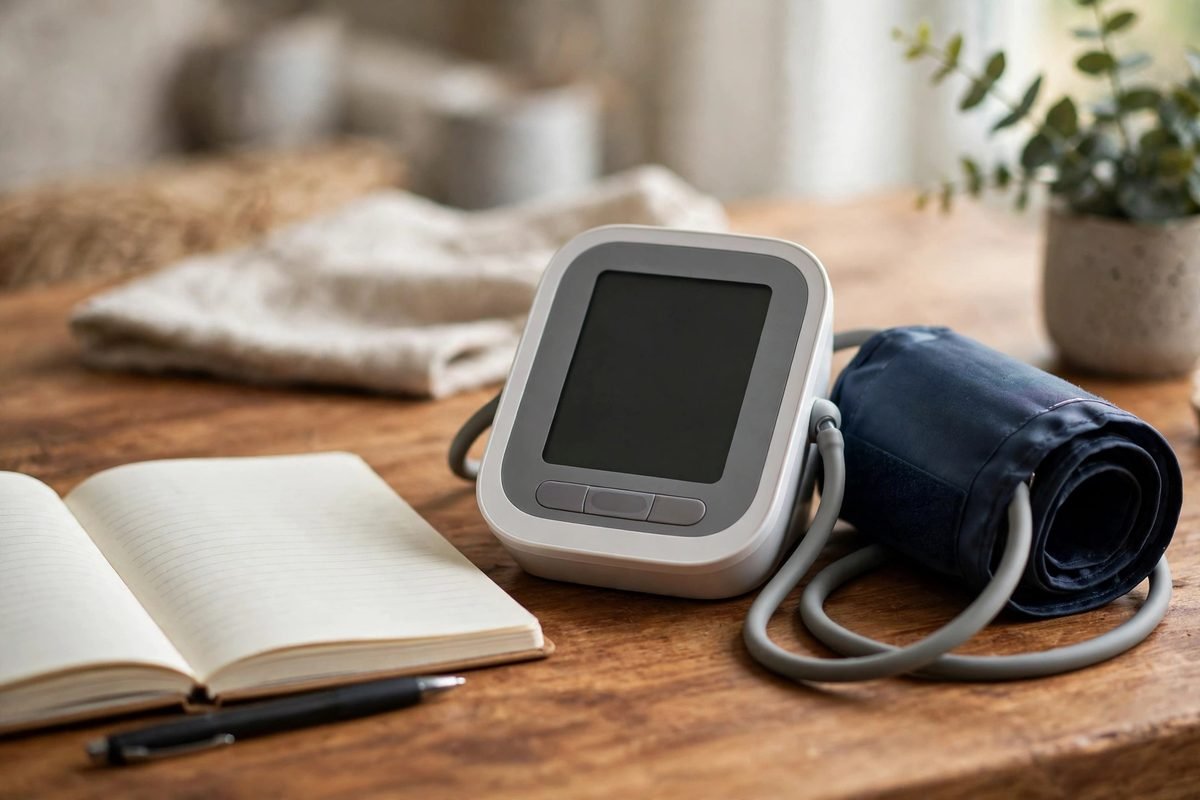
Low blood pressure readings explained honestly starts with a contrast. Most blood pressure advice warns about numbers that are too high, and for good reason, because high blood pressure quietly damages the heart, brain, kidneys, and eyes over years. Low readings are different. A low number is not automatically a problem, and for many healthy people a naturally low reading is simply their normal.
A low reading matters when it comes with symptoms, when it represents a sudden change from a person usual pattern, or when it signals that the heart, brain, and other organs are not receiving enough blood flow. This guide is the counterpart to our high reading content. It explains what counts as low, why readings fall, which symptoms change the meaning of a number, and what to do in the moment and over the following days.
The medical word for low blood pressure is hypotension. Throughout this guide, the practical rule stays the same. Judge a low reading by how you feel and by what changed, not by the number alone.
What counts as a low reading
Blood pressure is recorded as two numbers. The top number, systolic, reflects pressure when the heart beats. The bottom number, diastolic, reflects pressure when the heart rests between beats. A reading lower than 90 over 60 is generally described as low blood pressure. That threshold is a guide, not a verdict. A trained athlete, a young adult, or a smaller person may live comfortably at or below that line every day. An older adult whose usual reading is much higher may feel unwell at a level that still looks normal on a chart, because the drop from their personal baseline is what their body notices.
This is why context matters more for low readings than for high ones. Note three things with any low reading. Note the number itself. Note how you felt at the time, in plain words. And note what you were doing just before, such as standing up quickly, eating a large meal, exercising, or taking your medicines. A home log that captures all three turns a confusing reading into useful information for your care team. For technique that keeps home numbers trustworthy, including cuff size, rest time, and arm position, see Reading Blood Pressure at Home.
Why blood pressure falls
Blood pressure is regulated by the heart, the blood vessels, blood volume, hormones, and the nervous system working together, so a fall can come from several directions. Dehydration is one of the most common everyday causes. Fever, vomiting, diarrhea, heavy sweating, and simply drinking too little can reduce blood volume enough to lower pressure. Standing up quickly is another familiar trigger. When you stand, gravity pulls blood toward the legs, and the body normally compensates within moments. When that compensation is slow, pressure dips on standing and causes lightheadedness. Clinicians call this pattern orthostatic or postural hypotension, and it becomes more common with age.
Meals can also lower pressure for a time, especially large meals, because blood is directed toward digestion. This post meal pattern affects some older adults and people with certain nervous system conditions. Medicines are a major cause to review. Blood pressure medicines are designed to lower pressure, and a dose that was right last year can become too strong after weight loss, improved fitness, or the addition of another medicine.
Medicines for other conditions, including some for depression and for Parkinson disease, can lower pressure as a side effect. Underlying conditions matter as well, including heart problems that affect rhythm or pumping strength, diabetes, hormone disorders, significant blood loss, severe infection, and severe allergic reaction. A sudden fall linked to injury, bleeding, infection, or allergic reaction is an emergency pattern, not a wait and see pattern.
The symptoms that make a low reading matter
Many low readings cause no symptoms at all. When symptoms do appear, they follow from reduced blood flow, and they deserve attention in proportion to their severity. The common symptoms are dizziness or lightheadedness, fainting, tiredness or weakness, blurry vision, nausea, headache, neck or back discomfort, trouble concentrating, and a racing or fluttering heartbeat. The circumstances matter as much as the list. Dizziness that appears only on standing and clears within a minute of sitting tells one story. Fainting without warning, repeated fainting, or dizziness that does not clear when you sit or lie down tells a more serious one.
Certain signs move a low reading into urgent territory. Cold and sweaty skin, rapid breathing, a weak and rapid pulse, confusion, or a bluish tone to the skin can signal shock, a state in which organs are not receiving enough blood, and shock requires immediate emergency care. Chest discomfort, severe breathlessness, or fainting with injury also call for urgent assessment. When in doubt, treat fainting and shock signs as emergencies first and as blood pressure questions second.
For readers who also follow the high side of the scale, our guide to Dangerous Blood Pressure Levels explains the readings and symptoms at the upper end that need prompt attention, so you can hold both ends of the picture at once.
Low readings in people being treated for high blood pressure
The largest group who meet puzzling low readings are people successfully treating high blood pressure. Treatment works, habits improve, weight falls, and a dose that once produced perfect readings begins to produce readings that feel too low. Standing dizziness in the morning, lightheadedness after a hot shower, or unusual tiredness after a dose can all be early hints. Falls are the real risk in this group, especially for older adults, because a brief pressure dip on standing can become a fracture in a moment.
The correct response is a conversation, not a unilateral change. Never stop or halve a prescribed blood pressure medicine on your own because of a few low readings, and never double a dose because of one high reading either. Instead, bring a dated log. Record readings sitting and, if your care team advises it, standing, along with the time of your doses and any symptoms.
That log lets your clinician judge whether the pattern calls for a dose adjustment, a timing change, or a medicine review across everything you take, including medicines prescribed by other clinicians and any over the counter products you use regularly. Many people who have worked on lifestyle change find that their prescription needs genuinely fall over time, and a supervised reduction is a success to arrange properly, not a risk to improvise.
General lifestyle measures that support healthy pressure in both directions are covered in Lower Blood Pressure Naturally, and the hydration and meal habits discussed there are relevant to low reading patterns as well.
What to do in the moment, and what to track afterward
When a low reading comes with dizziness, sit down or lie down promptly rather than trying to push through it, because a fall causes more harm than the reading itself. If you can, raise your legs slightly while lying down. Sip water if you have not had enough fluid, unless your care team has given you a fluid restriction for another condition such as heart failure, in which case follow that instruction instead.
Stand up slowly in stages afterward, sitting at the edge of the bed or chair first, then standing while holding support. Compression stockings help some people who stand for long periods, and your care team can advise whether they suit you.
Afterward, write down the episode while it is fresh. Record the reading if you took one, the time, your symptoms and how long they lasted, what you were doing, when you last ate and drank, and when you took your medicines. A single mild episode with a clear trigger, such as standing quickly on a hot day after too little fluid, usually calls for self care and monitoring.
Repeated episodes, episodes without a clear trigger, any fainting, and any episode with the urgent signs described earlier call for prompt medical advice. Bring your episode notes and your medicine list to that appointment, because the pattern across episodes is usually what reveals the cause.
How clinicians work out the cause
Expect the assessment to start with careful measurement. Your care team will usually check blood pressure and pulse lying or sitting and then standing, to see whether position changes the numbers. They will review every medicine you take, ask about fluid intake, meals, alcohol, illness, and any bleeding, and ask exactly what your symptoms feel like and when they occur. Blood tests, urine tests, heart tracing, or imaging may follow depending on the story, and a tilt table test is sometimes used for people who faint repeatedly.
The aim is to separate the three broad groups of cause. The first group is a situational dip in an otherwise healthy system. The second group is a medicine effect that needs adjustment. The third group is an underlying condition that needs treatment in its own right. Each group has a different solution, which is why a careful history matters more than any single test.
Deepening section: a symptom first decision guide
Use this guide whenever a low reading surprises you. Step one, ignore the number for ten seconds and check how you feel. If you feel entirely well, as many people do at naturally low levels, note the reading in your log with the time and your activity, and carry on. Recheck later in the day under standard conditions, seated and rested, to confirm the pattern.
Step two, if you feel dizzy, lightheaded, nauseated, or faint, sit or lie down at once and follow the in the moment steps above. When the feeling clears, write the episode note before you forget the details. Step three, sort the episode by its trigger. Standing quickly, a large meal, heat, exercise, illness with fluid loss, and a recent dose of medicine are common and explainable triggers.
An episode with no trigger, or one that repeats despite fluids and slow position changes, deserves a call to your care team. Step four, check for the urgent signs at any point in this process. Confusion, cold and sweaty skin, rapid breathing, a weak rapid pulse, chest discomfort, severe breathlessness, or an actual faint with injury all bypass the earlier steps and need emergency care now.
Worked through honestly, this guide produces three outcomes. A well person with a low number learns to log and monitor rather than worry. A person with a triggered episode learns which habit or timing to change and what to report. And a person with an untriggered, repeated, or severe pattern reaches medical care promptly, with notes that make the assessment faster and more accurate.
Questions to ask at your next appointment
A short set of prepared questions helps you turn a home log into a clear plan, especially when low readings are new for you. Begin by asking what reading range your care team considers normal for you personally, given your age, your other conditions, and the medicines you take. A personal range is more useful than a general chart because it tells you which future readings deserve a call and which ones only need a note in your log.
Next, ask whether any of your current medicines could be contributing to the pattern, including medicines prescribed for other conditions and products you buy without a prescription. Bring a complete list with doses and the times you take them, and ask whether timing matters in your case. Ask also whether you should check your reading while sitting and then while standing at home, and if so, how long to wait after standing before you measure again. Clear instruction on that point prevents confusion and keeps your results consistent.
Then ask what symptoms should prompt you to call the office the same day, and what symptoms should send you to urgent care or emergency care instead. Write the answers down during the visit rather than relying on memory later. Finally, ask when your readings should be reviewed again and what change in the pattern would lead to a medicine adjustment or further testing. Leave with a review date, a personal range, and written guidance on symptoms. That combination makes each new reading easier to judge calmly and accurately at home.
Frequently asked questions
Is a low reading always healthier than a high reading?
No. A naturally low reading in a person who feels well is usually fine, but a reading low enough to cause symptoms, falls, or fainting is a genuine health risk. High readings damage organs quietly over years, while symptomatic low readings create immediate risks such as falls and inadequate blood flow.
Should I eat salt to raise a low reading?
Do not change your salt intake as a self treatment without medical advice, especially if you also have high blood pressure, heart disease, or kidney disease. Fluid intake, medicine review, and slow position changes are safer first topics to raise with your care team, who can advise on diet for your full picture.
Why do I feel dizzy only when I stand up?
That pattern usually reflects a temporary pressure dip on standing, when gravity shifts blood toward the legs and the body compensation is slow. It is more common with age, dehydration, and certain medicines. Rising in stages, staying hydrated, and reporting repeated episodes to your care team are the standard first responses.
When is a low reading an emergency?
When it comes with signs of shock, such as cold and sweaty skin, rapid breathing, a weak and rapid pulse, or confusion, or with chest discomfort, severe breathlessness, or fainting that causes injury. Those situations need emergency care immediately, not home monitoring.